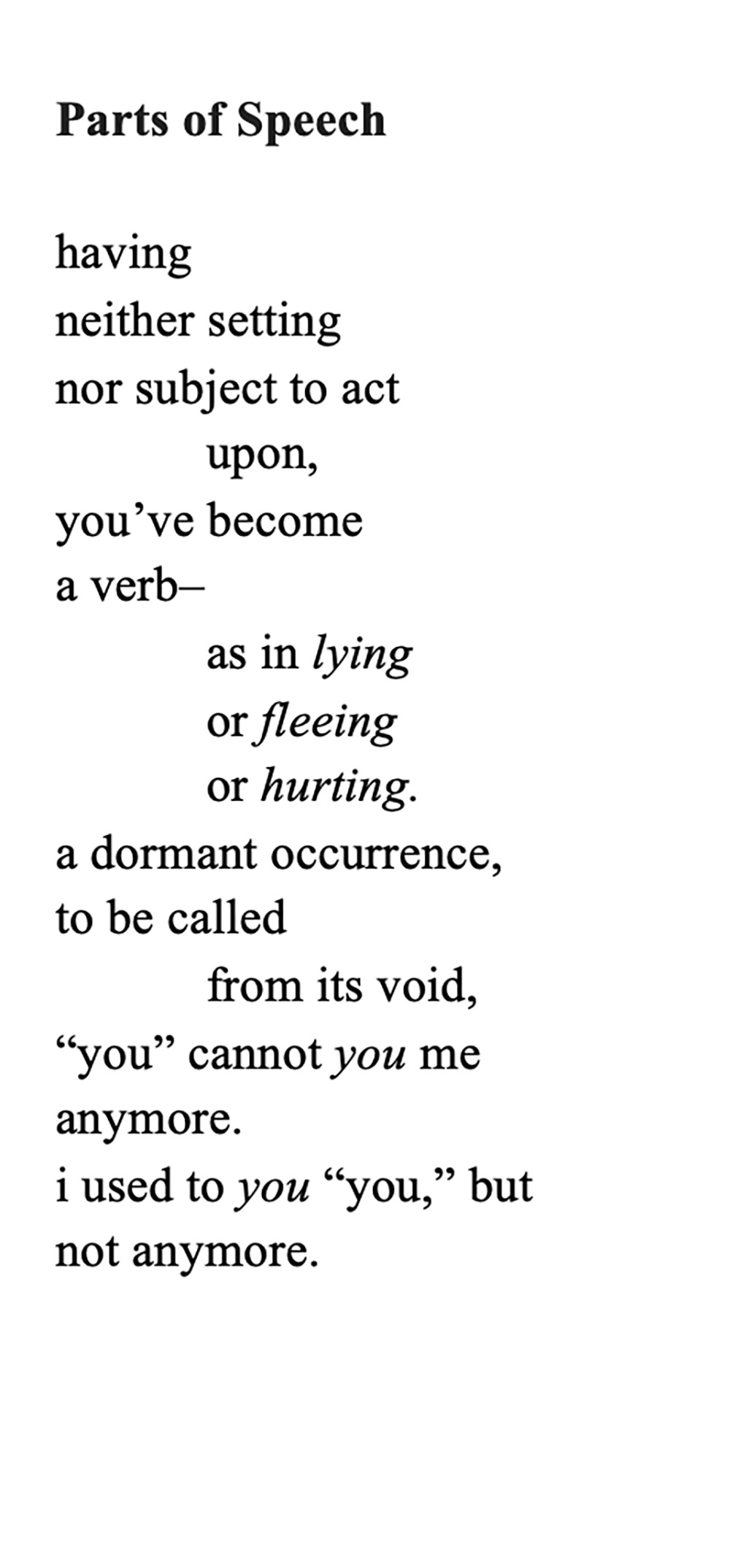
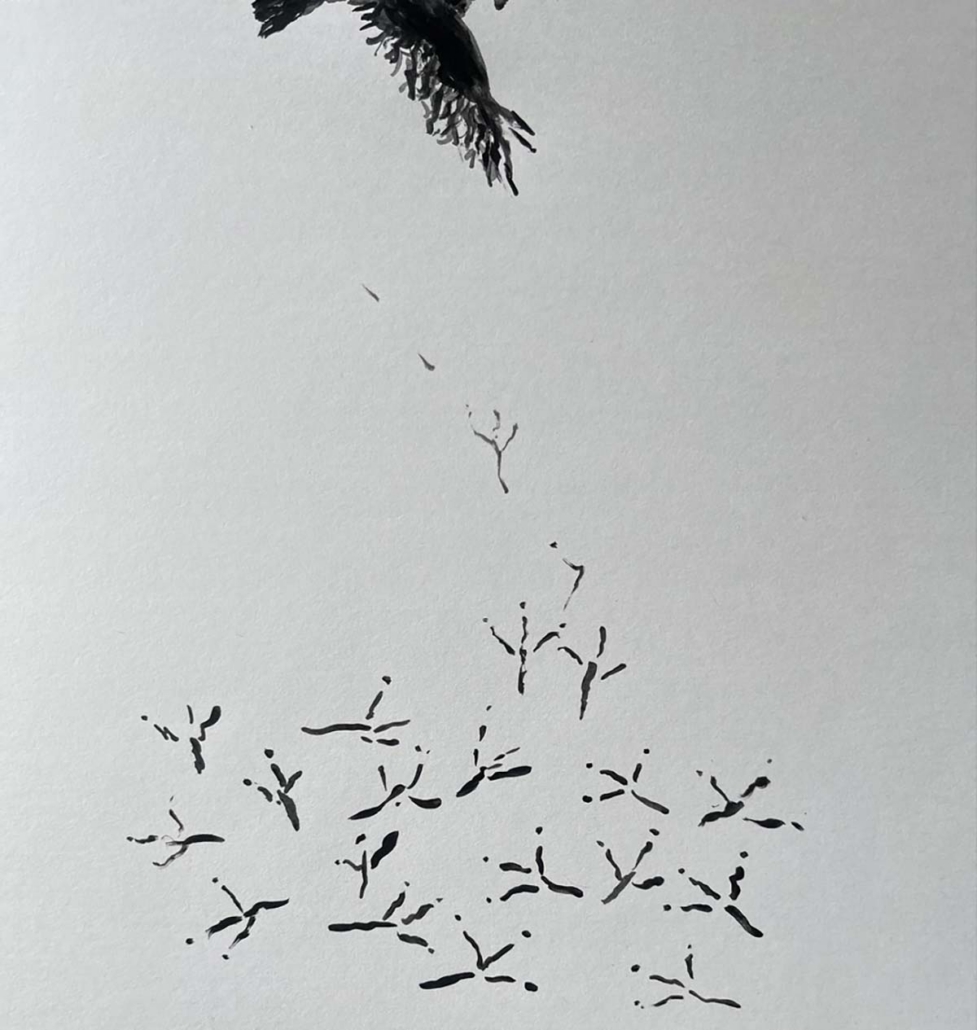
For you

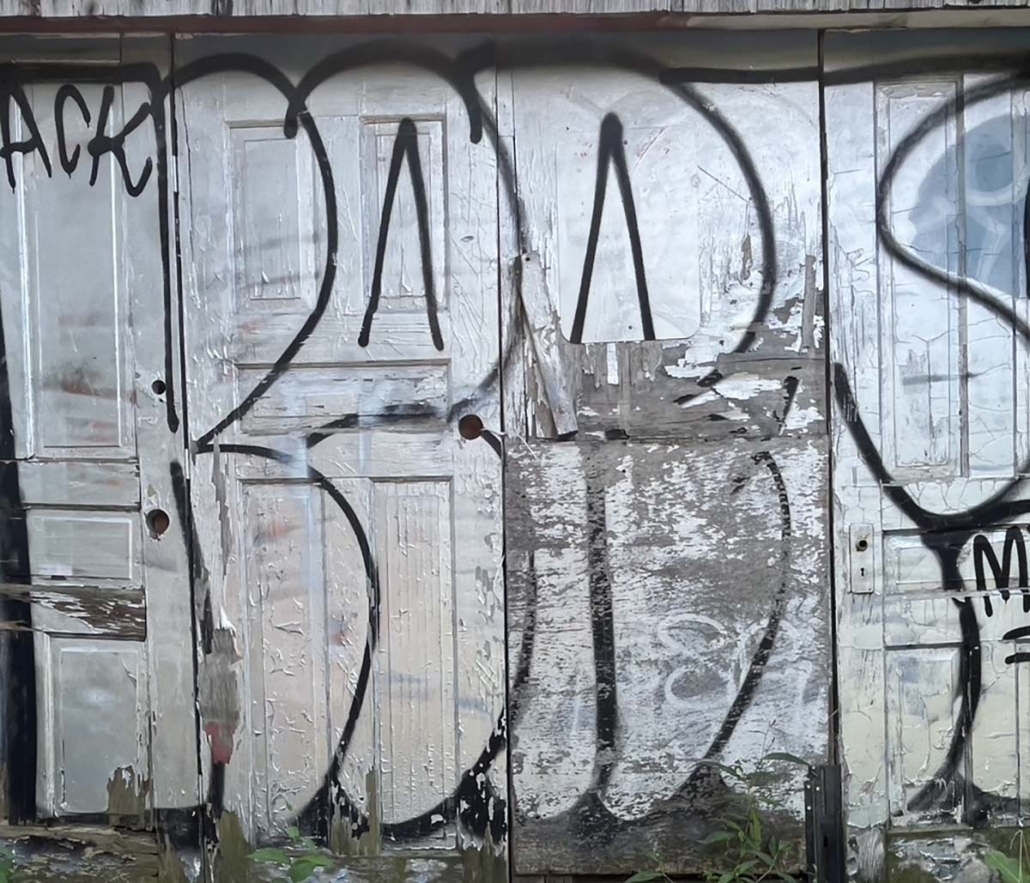
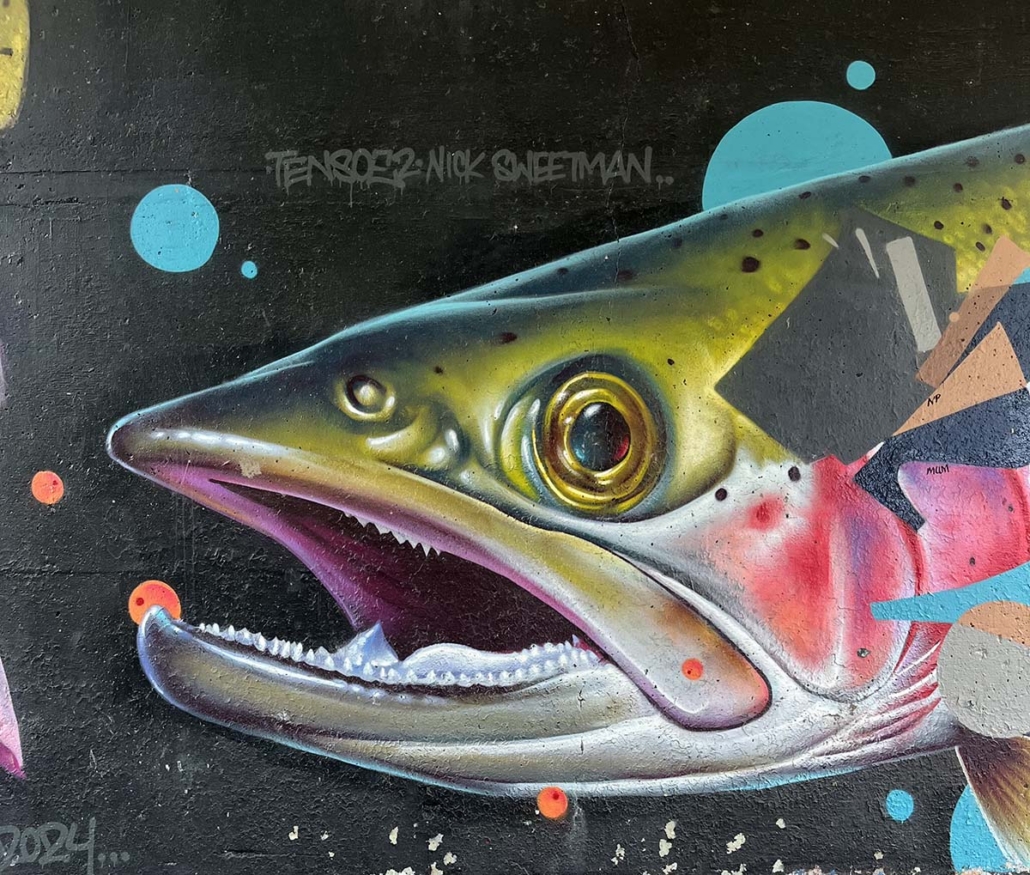
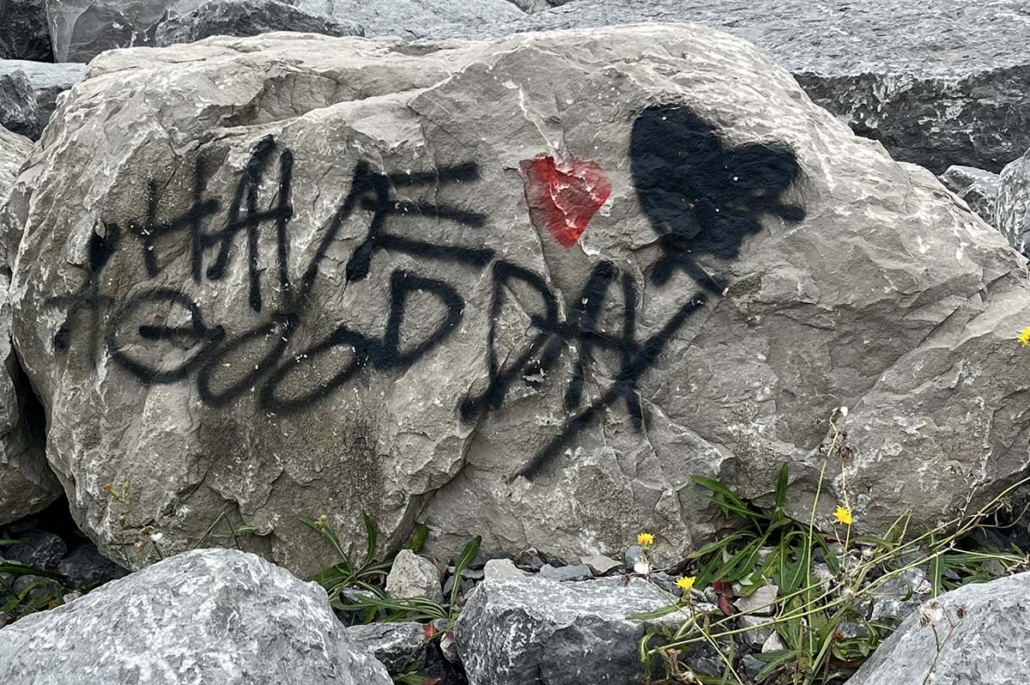
Street art by @Wade.Benedict
when you were young, you forgot every car has a driver.
you have asked countless people if they forget too. every time, they reply, no. what the hell is wrong with you?
in your defense, you were in desperate need of glasses. once you got them, thin wire frames that glinted red in the sun, you realized there were faces behind all those windshields.
this is what you are thinking as you stand in the kitchen.
not yours. not your kitchen. yours is nowhere this nice.
this is hope’s. your older cousin’s. you two hardly ever speak.
you told your parents you don’t need a babysitter. you’re old enough to stay home on your own.
really, faith? your mom said. you’re going to fight a woman already battling cancer?
you hate when your mom plays the stupid cancer card. she claims she can, since your aunt, her older sister, did it first.
you got mad when she did that, you pointed out to her once.
yes, your mom replied, but now i have cancer, so i can.
“faith,” hope calls out.
you turn, your fingers tangled behind your back.
you never like your name but hate it most when you’re with hope. you’re like the parson’s daughters who preach love yet exude hate.
“your mom and dad just left the hospital.” hope grabs her keys. “ready to go?”
no. no, you’re not. you don’t ever want to go home.
you follow hope out of her house, then into her new car. you wish you could switch places. your mom always liked hope better.
hope starts the car, then guides it out of the driveway and down the street. you watch her house disappear in the rearview mirror.
“so,” hope begins.
you instantly wince.
“how’s your grandpa?” she asks.
the muscles in your neck spasm involuntarily.
you picture frog legs. salted frog legs. when they move, the children scream.
“my… grandpa?” you echo. “like, as in my dad’s dad?”
last week, you met up with your old childhood friend. he moved away for a while and came back all wrong. it took until now for him to seem like himself, and though your dad didn’t want you hanging out with him, convinced you would come back engaged and six months pregnant, you agreed to meet up for a while, by the beach.
how’s your grandpa doing? your friend asked at one point.
you turned to him, chilled, and said, loudly, what?
he shrugged. this didn’t really seem like an occasion on which one should shrug, but he was never the most socially aware person. it’s why you got along so well.
i remember your mom telling mine about him, he said. i was just wondering how he’s doing now. that’s all.
he died, you replied.
he blinked, caught off guard.
i—he paused; you found yourself oddly reassured to know you weren’t the only one who left gaps in each conversation—i’m sorry. i didn’t know. i thought he was still in… i mean, in—
hospice.
this, you’d discovered, was how to tell if a person had ever loved someone who had gone into hospice. those unfamiliar shied away from the word. those who’d had to see it knew it wasn’t the word that evoked fear. it was the smell, or the stare, or the wide, gaping mouth.
i’m sorry, he said again.
then it was your turn to shrug.
it was a while ago, you said, as if that made it better.
maybe it did. you wouldn’t have even remembered exactly when it had happened if you hadn’t been the one to design the funeral program.
“no,” hope says now. “your mother’s dad. how’s he doing?”
you lick your lips, wishing you could just disappear.
in your mind, you have one grandpa, now kept captive in an urn. the other is called jiji, a shortened, slightly incorrect version of the japanese word for grandpa.
“he’s okay,” you reply. “he’s tired but okay.”
tired because his two children are living with cancer.
okay because he must be. you all have to be okay.
at least, you tell yourself, your mom is still in good spirits. the last time she was on the phone with a friend, she claimed her upcoming mastectomy wouldn’t be all that bad.
on the bright side, she said, i could lose up to one whole pound.
you hate being a woman. you wish you were a car. then again, how many men act like their cars are women?
“he’s okay,” you say again, if only to yourself.
“good,” faith replies. “that’s good. i’m glad to hear.”
she pauses. you know, now, what she is going to ask next.
she spits it out: “how are you?”
you’re tired, and you do not want to talk.
you take the tissue she’s offering without understanding why.
then, once the tears start dripping down your neck, you smash her gift against your face.
when you were growing up, in addition to believing most cars drove themselves, you also thought you and your cousin had to be two separate species. she was everything you knew you could never, ever be: pretty, popular, prom queen two years running.
yet here, in her car, you see she knows you better than you’ve ever known yourself.
“thank you,” you say. then, later: “sorry.”
“don’t be sorry,” hope says. “just rest. you’ll be home soon enough.”
when you turn to the window, you find a familiar scene. if you squint—as you have to; you left your good contacts at home—you think you can see your apartment building.
“just rest,” hope repeats, her voice smoother than the road.
you force yourself to relax. the car seat embraces you.
you lean back, exhale slowly, and let hope guide you home.
Born and raised in Hawaiʻi, Kelly Murashige (https://www.kellymurashige.com/) is the author of the award-winning YA novel The Lost Souls of Benzaiten and Adam Silvera’s July 2025 Allstora Book Club Pick, The Yomigaeri Tunnel. Her 2025 short fiction has been nominated for Best Small Fictions.
The boy is clever. He is awkward. Although he loves jazz, he never joined the middle school band. Today, he lied. The lie was why he was late coming home from school. A locker. A bully. The bruise on his forearm looks like a grape tomato, the one on his thigh looks like a bloody steak. In elementary he performed at the talent show. He’s older now. He knows better.
T.L. Tomljanovic is a judge for The Pride Roars blog and Off Topic Publishing’s flash fiction and CNF contests, and a Pushcart Prize, Best Small Fictions, and Best Microfiction nominee. Currently, she is curating a collection of microfiction titled Feast or Famine. Find her on Blue Sky @tomljanovic.bsky.social and at tomljanovic.wordpress.com/.
To him, the most romantic kind of love was a couple with white hair still standing side by side, watching the sun sink into the sea. We had only been living together for three months, yet we had already begun imagining the texture of our love: I thought of sails pitched against open water while he pictured a long, unbroken horizon. I told him he was wrong. How many couples ended up walking into the grave of marriage? How many spouses truly shared life with each other instead of bitterness? He always met my pessimism with a smile. He liked my edges; I liked the way he gave. When I came home from work and stayed up late studying for the graduate entrance exam, he would make me a cup of warm milk. Even when we had nothing, he still believed that being together was enough to make us happy. At twenty-three, we had both just graduated from college. He rented a tiny stall to repair phones; I worked as a clerk at a foreign trade company. We shared the same insecurity, only from opposite directions. Years ago, his parents had sewn all their savings into the lining of their pants and left for Guangzhou to make a living. His grandmother in the countryside forced him to stay behind. His body was left with an emptiness that could never be filled, his parents forever somewhere beyond reach. In my family, after my brother died of leukemia, my parents turned the living room into a courtroom of mutual accusations. My mother spent most of her days lying in bed, sobbing. My heart learned what it meant to feel distance at close range. We were both afraid of being abandoned. He tried carefully to please me; I planned to leave the moment he showed any sign of growing tired of me. When I had a fever, he stayed up with me through the night, poured warm water for me, checked my temperature. I clung to his gentleness. It was a hunger my body had learned to live with. He said when I was angry, I was like a cactus, bristling with sharp spines. After long hours repairing phones, his fingers always carried a sticky residue that never quite washed off. A film made of glue and sweat. Once, he brought home a pair of diagonal cutters, the blades sharp, gleaming with the cold light of a rodent’s teeth. He asked me to lie down and said he would help trim away the spines that had risen up. When the cutters closed, they made a faint sound, like fingernails being clipped. I imagined the nameless resentment that roamed beneath my skin being cut away, stripped off with precision. I wondered whether my mother had once wanted to pass something like it on as well. Whenever I was home, she would complain to me. About her headaches, her insomnia, the loudspeakers downstairs, the mold on the ceiling, every moment she felt she had been wronged. My comfort turned her into a black hole, draining me of hope. At night, I slept with my back to him, curled up like a baby. The spines along my back kept growing, sharper than before. He asked what was wrong. I said I was just tired. He asked if I had been losing sleep again, if I was having trouble breathing, and suggested we go running or hiking. His care settled in the details. I wanted to say that all I needed was a warm embrace, but my body didn’t know how to ask. He wrapped his arms around me from behind. I told him to be careful of my spines. He said it was fine. The spines pressed into his chest, like bamboo shoots searching for a place to take root between stones. Through pajamas, I could feel his body heat. I told him I loved him, that I wouldn’t leave him, using my words like a pledge to fill the emptiness in his chest. He said we would last forever. So we lay there, holding each other. Waiting for seas to dry and rocks to crumble. Waiting for our bodies to learn each other. Waiting for the future we cannot escape.
Huina Zheng either writes as an admission coach at work or writes for fun after work. She lives in Guangzhou, China, with her family.
It will feel good to step into the
free air of New York City, a young
woman says, her tall companion trailing
alongside with his suitcase—hard
to tell how serious they are,
glamorous in their youth, untroubled,
returned from London where
petrol is up 7 to 15p, depending
on the station, where CNN London
shows bombings of fuel depots
on one split screen, a sodomized
Palestinian prisoner on another.
Will flights be canceled? Will
prices rise beyond the
far horizon? The stewardess
hands out landing sweets
down the aisle, her bowl
proffered row by row—maybe,
one last memory of the world
before it falls. Visual ID at the kiosk,
facial recognition complete,
no chat with customs. Past
the cab line, cloudy sky
and cold, an ICE van sits
and waits. The taxi driver
takes your address, and fortunate,
you leave the worries of others
for another day. You find
your own worries. You are
in the free air of New York City,
the potholes being fixed,
something festering beneath.
Nora Rawn works in subrights in publishing and lives in Brooklyn. She has pieces published or forthcoming in Dodo Eraser, Dreck Lit, Be About It Press, Hawkeye, Burial Magazine, Some Words, and Michigan City Review of Books among others. She is on twitter at @norabird.
They told us to go,
but did not say where.
So we lifted our lives in our hands like bowls of water,
already spilling, already thinning,
and waited for the ground to appear beneath our feet.
But the ground was a question.
The water was a memory.
And the air was full of orders with no directions.
In Makoko, houses learned to float because the world beneath them refused to stay.
Wood balanced on water,
corrugated roofs leaned into the sky like tired shoulders,
and children learned the language of paddles before the language of books.
We built our prayers on stilts.
We cooked hope over open fires that trembled with every passing wave.
We slept listening to the lake breathe.
Then the machines came,
with teeth of iron and voices of authority.
They spoke of development,
of danger,
of removal.
They spoke in straight lines and legal papers,
while our lives were written in circles of tide and time.
“Go,” they said.
As if “go” were a place.
As if “go” had a door,
or a bed,
or a name.
Wood cracked.
Nails screamed.
Roof sheets folded like wings that forgot how to fly.
The water swallowed what it had once carried,
not gently, not slowly,
but with the hunger of something that had been commanded to erase.
Mothers clutched cooking pots like lifelines.
Fathers held silence in their fists.
Children counted the planks of their homes as they disappeared,
one, two, three—
until there was nothing left to count but waves.
Homelessness is not only the absence of walls.
It is the absence of tomorrow.
It is the way night stretches when you no longer know
where morning will find you.
It is the cold that enters the body
and refuses to leave.
It is being told you do not belong anywhere,
and being given no map to prove otherwise.
They told us to go,
but did not say where.
So we stand between water and sky,
carrying the weight of a place that no longer exists,
yet refuses to die inside us.
Makoko still floats in our chests,
in the rhythm of paddles,
in the smell of smoke and fish,
in the songs that rise even when the houses fall.
We were not moved.
We were unrooted.
And the earth, like the water,
is still deciding
where to let us rest.
Solape Adetutu Adeyemi is an environmental management professional, researcher, and award-winning creative writer with nearly two decades of experience in the FMCG industry. Holding degrees in Microbiology and Environmental Management, she integrates science, sustainability, and strategic leadership to drive meaningful impact. Her literary works have been published in The Guardian, Indiana Review, Kalahari Review, and other respected platforms. A certified professional across ISO standards, Health & Safety, HR Management, and Scriptwriting, Solape brings multidisciplinary excellence to every endeavor. She currently serves as Vice Chairman, Association of Nigerian Authors (Lagos Chapter) and remains deeply committed to environmental advocacy, leadership, and cultural advancement.
if our relationship was nothing but a game to you, if you regret the words you said to me more than those you withheld, if I’m finally brave enough to tell you I’ll never be the person you’ve imagined.
Lori Cramer’s short prose has appeared in Fictive Dream, Flash Boulevard, Scaffold, Splonk, Whale Road Review, and elsewhere. Her work has been longlisted for the Wigleaf Top 50 and nominated for Best Microfiction and Best of the Net. Links to her writing can be found at https://loricramerfiction.wordpress.com. Bluesky: @loricramerwriter.bsky.social. X: @LCramer29.
Little Red Riding Hood looked at the red cape, the generous hood folded open like a mouth beckoning her back in. Were those teeth? She squinted but saw only darkness where the fabric folded into oblivion. She knew going back would bring ruin. But what if she had kept wearing that cape, had run around in the woods with that basket looking for danger? Or was it, waiting for danger to find her? She couldn’t be sure. Her memory was obscured by wolf-themed trauma.
Red had given up the deep forest for the arid and sandy landscapes of Tucson, Arizona. But she longed to put the cape back on. It was like an old friend who refused to text her back, but also refused to end the friendship. Now that she was safe in this two-bedroom rambler, it no longer mattered. She could give the cape to Goodwill and wear the new Irish jumper her mother had brought back from a visit to the Emerald Isle. “Red,” her mother had said, “this will keep you warm and protect you from snakes on desert nights.” At least that’s what the old Irishman had told her.
Red thought the desert lifestyle suited her. She smiled as she watched greater roadrunners flip their tail feathers and Gila monsters plod along, their bellies plowing dry dirt. She no longer jumped at the sound of a howling wolf, although admittedly she cringed when she heard the rattle of a tail just beyond a boulder. Sure, she missed her woodland friends. They were less scaly, more apt to smile. She had yet to encounter a smiling reptile, and the cacti were predictably prickly. But then she remembered the wolf smiling at her and thought with a shudder, It’s okay if they don’t smile. I don’t need everyone to like me.
Christine Gallagher Kearney is the author of What We Leave Behind, a historical novel described by Foreword Reviews as “triumphant and affecting” (She Writes Press). In 2022, she was selected for the StoryBoard fiction workshop at StoryStudio Chicago. She is a former food columnist for the Irish American News, and her work has appeared in Wild Roof Journal, Driftless Magazine, ForbesWoman, Fortune, and Cara Magazine. She is at work on her next novel about a whale, grief and climate change.
You have never wanted anything more than you want that giant rodent.
You bounce on the balls of your feet, your eyes glued to the pile of capybara plushes sitting behind the glass in the claw machine. Your mommy and daddy have been trying to win one for you for the past ten minutes, and you’re starting to lose hope.
You love capybaras. They’re your favorite animal in the world. That highly coveted title once belonged to unicorns, but then Justin Chun told you unicorns weren’t real and therefore don’t count, and you had to keep yourself from shouting, Or maybe YOU don’t count, JUSTIN in his stupid, ugly face.
You were sad for a while, about the unicorns. Now that you’re older—it’s been a whole three weeks—you have come to believe capybaras are the better animal. Unicorns, if real, would have turned you into a human shish kebab anyhow.
“Two more seconds,” you say, staring at the timer display. “Daddy, two more seconds!”
“I got it,” your daddy says, lifting his hand from the joystick.
He slaps the center button. You pray with all your might. You’re afraid begging God for a toy might be what your mommy would call sacrilegious, but you can’t help it. You want it so, so much.
If You give me this, you think, I swear I will be good.
You watch, your fists clenched, as the metal claw descends.
Two silver prongs poke the capybara’s butt. Three suspenseful seconds later, they pull themselves back out.
You exhale, disappointed. Your mommy shakes her head.
“Again,” you tell your daddy. “Daddy, try again!”
Your daddy slips his fingers into his pocket. When he comes back empty-handed, just like that stupid claw, he says, “Give me a second, sweetie. I have to get more tokens.”
“More?” Your mommy frowns. “Is that such a good idea?”
You make a face. Your mommy’s silly. Of course it’s a good idea. More tokens mean more plays, which means more capybaras.
Your daddy turns away.
“I’ll be back,” he says.
Your mommy’s brows pull together. You’ve learned this means she’s mad. You try to tell yourself it’s because your daddy hasn’t won anything yet, but you’re not sure that’s it.
You’re still staring at the pile of capybaras, hoping you’ll magically develop laser vision and melt the glass separating you from the only things you’ve ever wanted in your whole entire life, when it hits you. You remember. What Katherine said yesterday.
You don’t like Katherine Miller. She stole your best friend twice. Then, yesterday, during lunch, she stood up and announced to everyone that soon, you will be poor. Her daddy is your daddy’s boss, and according to her daddy, your daddy’s losing his job.
On the way home, you told your mommy what you’d heard. She went quiet. Said don’t worry. That was a grown-up thing.
You knew then that it was true. That Katherine was right, and you’re going to be poor.
You know being poor isn’t always bad; Cinderella and Snow White were poor, and they got their happily ever afters, didn’t they?
You’re just afraid you’re not pretty or sweet or a good enough singer to make a handsome prince want to marry you.
They’re taking over you now. The Big, Ugly Feelings. You don’t know why they come, but when they do, they hit hard. All you can do is go dark. Shut down.
“All right,” your daddy says. “Let’s get you that capybara.”
You open your eyes. The tokens in his hand shine like Katherine Miller’s teeth.
You shake your head, your throat tight.
“I don’t want it,” you say.
Your daddy frowns. “What do you mean?”
“I don’t want it,” you say again. “I don’t want some stupid toy.”
Your eyes dart to the plushes. They stare back at you sadly.
It might be the guilt, or the noise, or the stress, but whatever it is, it makes you start to cry.
Your mommy and daddy exchange a look.
“Honey,” your daddy says. “What’s wrong? What happened?”
“I want to go home,” you tell him, and this, at least, is true. The music’s too loud. The lights are too bright. You’re going to be poor soon. Capybaras can’t fix that.
Your mommy looks up. Behind the panes of glass, the claw hangs limp, a wilted flower. “We didn’t get you your capybara yet.”
“I don’t care,” you say, even though you really do. “Take me home. Take me home. I just want to go home.”
They ask you, three times over, if this is what you want.
“Take me home,” you say again. How long will you have a house?
You look to the capybaras, as if you expect an answer.
They avert their gazes. They don’t want to break your heart.
“What’s wrong?” your mommy asks. “Can you just tell us what’s wrong?”
You shake your head. The Feelings. They’re too much for you again.
“Okay,” your daddy says. “We can talk this out at home.”
Your parents both reach for you, moving in perfect sync.
Yet for a moment, you’re certain they won’t be able to find you. Not when you’re lost in a sea of Big Emotions.
They pluck you out like it’s easy. Like they can’t lose sight of you. They raise you up and hold you in their safe, warm arms.
“I’m sorry,” your daddy says. “I wish I had gotten you that toy.”
You shake your head. Close your eyes. Rest your cheek against his neck.
You did not get a plush, but you won anyhow.
Born and raised in Hawaiʻi, Kelly Murashige (https://www.kellymurashige.com/) is the author of the award-winning YA novel The Lost Souls of Benzaiten and Adam Silvera’s July 2025 Allstora Book Club Pick, The Yomigaeri Tunnel. Her 2025 short fiction has been nominated for Best Small Fictions.

We love the psychological clarity of this. Like it knows to meet us where we are. If we can’t be kind, exactly, if we’re not in the place or position for that, we can at least be kind(er).
My train is here but
my heart is late.
My heart is here, all packed
and ready but the train
is late.
On the train we wonder
will it break down?
Will there be a collision
on the tracks?
These things happen,
it is often said,
to make us
feel better
about disaster.
Kyla Houbolt is a poet and gardener living in North Carolina. Her first full length poetry collection, Becoming Altar, from Subpress Poetry, is available here: https://asterismbooks.com/product/becoming-altar-new-and-selected-poems Social media: https://bsky.app/profile/luaz.bsky.social, and website: https://kylahoubolt.us/
Mother in her coffin, still as a broken doll, her mouth a slash of plum lipstick she never owned.
Can’t walk talk blink eat breathe.
How could she forget how to breathe? I ask them.
In The Place, Mother in a wheelchair. Stationed in the garden or next to her bed. Sometimes they put her in the hall and forget about her.
The Place has big windows. All the nurses wear white uniforms, funny white hats and shoes that never squeak.
There’s one nurse – with seams on her stockings – who whispers maybe she doesn’t recall what she says to you but she knows she loves you.
Everyone’s batty here, Mother tells me. Don’t eat the bananas. They’re poisoned.
Mother screaming at the nurse, stop trying to kill me. You won’t get away with it.
Mother, who never raises her voice because it’s not swan lady.
Where’s Aunt Sue, she asks, when we went to Sue’s funeral, shoveled dirt into her grave.
Mother in the wheelchair with her chin chest-drooped.
Are you sleeping, Mother? No. Her hand reaching for mine, not letting go.
Mother at her wedding in a white lace dress with a train. Why do they call it that when there aren’t any tracks? My father circling her orbit like a planet glued to the sun.
Mother in the Yellow House, making Apple Brown Betty, letting me help. Cinnamon brown sugar butter lemon something sticky.
Mother as a girl. Pigtails. Pogo stick. A blouse that her own mother embroidered. Mother’s name on the collar. I have the picture somewhere.
Sylvia, you’re my angel, she used to say. My good girl. My star.
What was written there?
Sylvia?
That’s not right.
It begins with a G.
I love you, angel and then she’d fold me inside her wings.
Beth Sherman has had more than 200 stories published in literary journals, including Ghost Parachute, Fictive Dream, Bending Genres and Smokelong Quarterly, where she’s a Submissions Editor. Her work is featured in Best Microfiction2024 and 2026 and Best Small Fictions 2025. She’s also a multiple Pushcart and Best of the Net nominee. She can be reached on social media @bsherm36.
When I am asked
Why are you so quiet –
even trees hold their memories
hushed, ringed
in their bodies,
each year
layered
in trunks,
humming
in a frequency
unmeasurable in syllables
until someone comes along
– a roaring saw
teeth
demanding
answers.
JENNY WONG is a writer, traveler, and occasional business analyst. Her favorite places to wander are Tokyo alleys, Singapore hawker centers, and Parisian cemeteries. Her work was selected for Best Microfiction 2025 and has been nominated for the Pushcart Prize, the Best of the Net, Best Small Fictions, Best Microfiction, and The Forward Prize – Best Single Poem (Written). Her debut chapbook is “Shiftings & Other Coordinates of Disorder” (Pinhole Poetry, 2024). She resides in Canada near the Rocky Mountains where she makes short poetry films and plans her next adventures. Visit her website: jenwithwords.opencorners.ca or find her on Instagram/X/Bluesky: @jenwithwords.
I call my parents at three in the morning. “Why are you calling us at three in the morning?” my dad says.
“I was having bad dreams,” I tell him.
“You’re fifty-seven,” he says. “You’re supposed to be having bad dreams. Go back to sleep.” He hangs up the phone.
So I go back to sleep, and in my dream I’m calling my parents, but they never pick up the phone.
*
I think about what my dad said and I call my parents the next day to apologize profusely, but they don’t remember I’ve called. “Okay,” I say. “But you said something about how I’m supposed to have bad dreams at my age. What is that supposed to mean?”
“What do you think it means?” my dad says. “The older you get, the worse it gets. Haven’t you figured that out yet?”
“Wait,” I say. “What are your dreams like then?”
“Nothing but screaming,” my dad says. “Sometimes I fall out of the bed. Sometimes it’s your mother.”
“And the tentacles,” my mom says. “Don’t forget about all the tentacles.”
“Tentacles?” I ask, doing my best not to sound alarmed.
“Just you wait for the tentacles,” my mom says. “Are you still going to have lunch with us Sunday at 1:00?”
“Let’s meet at Howard’s on the pier,” my dad says. “I’ll make the reservation.”
*
At Howard’s my parents order octopus. I order the fried squid. “You should take it easy on all the fried food,” my mom says. “You’ll get bad dreams.”
“But if I’m going to get bad dreams anyway,” I say, “why shouldn’t I eat whatever I want?”
“Bad dreams AND high cholesterol,” my dad says, sticking a fork with a chunk of octopus on it at me. Like he knows what he’s talking about.
“You think it’s hard running in your dreams now,” my mom says. “Wait till you find out.”
“Try running anywhere after your first heart attack,” my dad says.
I flag the server and change my order to a salad.
*
In my dreams there is so much cholesterol, and I don’t care. I’m eating the fried chicken of my childhood, the fried clams, the fried everything.
The ocean seethes. I’m sitting on a bench, my greasy fingers reaching into the to-go bag, pulling out a French fry, a clam strip.
Each thing I eat in this dream is only going to make it worse. I know that, nobody has to tell me. But I keep eating, I’m enjoying every morsel I put in my mouth. The crunch. The salt, the chewy bits, everything.
*
My son calls me to tell me about his dreams. It’s always summer, he’s in the car with us on our way to go to the beach, but the car breaks down. We fix it and something else breaks. We fix that but now it’s dark. But we’re nearly there, so we go to the beach in the middle of the night, in the dark. Other people are there too, some families; pairs sneak off. They sound like birds. They don’t return.
The moon is full, we’re busy eating.
We don’t mind it when our kids go swimming in the ocean. We don’t mind when they never come back. We don’t even call.
“What do you think that means?” my son asks.
“Have you ever just sat there,” I say. “Looking out for something nobody can see?”
“Sometimes,” my son admits.
“Keep doing that,” I say. “You’ll see.”
Hugh Behm-Steinberg (he/him/his)’s fiction can be found in X-Ray, ergot, Hex, Heavy Feather Review and The Coffin Bell. His short story “Taylor Swift” won the Barthelme Prize from Gulf Coast, and his story “Goodwill” was picked as one of Wigleaf’s Top Fifty Very Short Fictions. A collection of prose poems and microfiction, Animal Children, was published by Nomadic/Black Lawrence Press. He lives in Barcelona, where he’s the fiction editor of Mercurius. https://linktr.ee/hughsteinberg.
When I was younger
I tried to imagine the future.
I saw myself as a watcher.
I watched people passing,
their shapes indiscernible.
My eyes were clear as windows
but that was all I could see.
I could only see my own eyes.
I always thought watching was
something you had to do alone.
Though I’ve never been burned by fire,
I can feel its flame the same way
I can feel myself falling
from the top of the swing set,
me falling into the pond by my sister’s barn,
or many years later, a sharp turn
in the road and a large oak tree
like an axe cutting me in half.
I used to think only bees were pollinators,
but now I know that isn’t true.
Moths, hornets, and wasps also
transfer pollen from flower to flower—
small city of magenta, deep purple, blushing pink.
Even flies can pollinate,
the second most important pollinator,
but we are only interested in firsts.
There is so little we want to know.
In a city this hot, the only thing
to talk about is the weather.
We spend our days chasing the wind,
avoiding streets with no air.
A city where breeze becomes benediction.
A weather this merciless will change you.
Heat this extreme requires discipline.
Now that I’m away, what is there left to say?
Esther Sadoff is a teacher and writer from Columbus, Ohio. She is the author of four chapbooks: Some Wild Woman (Finishing Line Press), Serendipity in France (Finishing Line Press), Dear Silence (Kelsay Books), and If I Hold my Breath (Bottlecap Press). She was nominated for a Pushcart Prize by Hole in the Head Review, and she is the winner of the Women of Ohio 2025 Poetry Award.
All the flaring of the day
Dissipates, leaving cracks
For waves of winds
To sweep in a clear-cut night
心房: heart house for a soul to dwell in
心扉: heart door always ready to be opened
心鼓: heart drum to be beaten rhythmically
心匣: heart case where to store one’s feelings
心镜: heart mirror to reflect one’s inner self
心田: heart field in which to grow the seeds of hope
心原: heart wildland for the will to roam freely
心谷: heart valley where one can camp for the night
心河: heart river to drift along on a sunny day
心海: heart sea to navigate towards the sun
心空: heart sky under which to fly against light
心坎: heart threshold for a traveller to step over
Yuan Changming co-edits Poetry Pacific with Allen Yuan. Yuan’s poetry, fiction, and creative nonfiction have appeared in Best of the Best Canadian Poetry (2008–2017), BestNewPoemsOnline, and over 2,200 publications across 52 countries. He has published sixteen chapbooks and received multiple Pushcart Prize and Best of the Net nominations. A former poetry juror for Canada’s National Magazine Awards, he began writing fiction in 2022. His recent books include The Tuner, Flashbacks, Return to Roots, and the novel trilogy Towards, all available on Amazon.
A terrible roar shook the Earth to its molten middle. In the skyscraper’s timeless Art Deco facade, the improbably large dinosaur saw its mirrored reflection. An enemy!
Taking a bite out of the Big Apple’s iconic terraced crown, the behemoth sent a deadly rain of glass, steel, and bricks to the avenue below.
People from all walks of life found common ground in running, screaming, for their lives.
Wholly by coincidence, a conspiracy theorist convention was meeting across the street that day. Upon hearing the news, the conference organisers cancelled the informal breakout sessions. Drastic times called for similar measures; they convened an impromptu emergency panel discussion.
Debate raged like civil war between radical factions. Was it all an authoritarian government false flag power grab, or hallucinogenic fluoride in the tap water?
But on something they did agree, and so they flocked outside with one mind, intent on proving there was no danger.
The leviathan lizard’s attention turned to its prey.
“It’s a hologram, a cheap hoax!” said the overpaid keynote speaker to his acolytes.
The beast separated the speaker’s head from his body with one swift bite. The sickening crunch made any further debate redundant.
On the 31st floor, a menace of stone gargoyles roosted peacefully, their wings outstretched. For decades, they had guarded the building’s corners, sightlessly watching life come and go.
Under the unrelenting monstrous assault, their solemn watch ended with an inelegant swan dive to the street.
As an armoured convoy armed with anti-dinosaur bazookas rolled up 42nd Street, the cinema audience cheered in their seats.
“This is fantastic!” the director turned in his VIP recliner to the man slumped next to him. “When does any film ever get this reaction?”
The writer’s story was a hit, but to him the technicolour picture’s was drab grey. His salted buttermilk popcorn? Flavourless cardboard.
He was inconsolable; he should have known the director wouldn’t get it.
The writer had kissed his late wife at the skyscraper’s 71st-floor observatory on their first date. The building represented his love.
The dinosaur? His raging grief.
Jay Chesters is a Western Australian transplant with a penchant for the peculiar and blurring genres. They come from a long tradition of people who are, at best, today described generously as ‘eccentrics’. Lacking skills in swordfighting, horseback riding, or swordfighting on horseback, and finding few opportunities for getting fired out of cannons, Jay writes stories instead. Jay’s published books are The Cat Who Hated Bird and Year of the Bear. These tales share good company with those in two printed collections from Night Parrot Press and various stories published online. Collectively, Jay explores identity and connection, and the surprising beauty of the human experience. They acknowledge the unceded boodja of the Wadjak Noongar people on which they live and write.
A box wrapped in green and red plaid paper, which looks suspiciously like a PlayStation 5, appears under the Christmas tree. Like, almost three feet tall by ten inches wide, this box, not just a console jankily wrapped in paper—the things have a distinctive look, like a science fiction toaster.
At the moment, a PlayStation 5 is impossible to find at Target, Walmart, etc. You can buy one online for almost twice its official price and you’re likely to get scammed.
For this and other reasons, such as existential guilt that I have better shit to do with my free time (reading, writing, exercising), which is ample after losing my job—our boutique bookstore finally closed last month—I told my wife I didn’t want a PlayStation 5. If I ever get one, I’d wait until they were available in stores and cheaper.
I’m not handy. I don’t own any tools. My wife is, and she’s got a whole, for real toolbox. Today, while she’s at work advising students at the university, I check in her toolbox for measuring tape and don’t find any. I do find a ruler in the drawer of my stepson’s school supplies.
I Google the exact dimensions of the PlayStation 5 box.
The box under the tree is just a little too short, half an inch, but maybe the measurements I found online aren’t up to date. Maybe this is some kind of new packaging. Second-hand and repackaged by eBay scalpers. For the life of me, I can’t figure out what she’d buy for me that would come in a rectangular box this size.
I peek through a fold of wrapping paper. I find a loose place where I can just slightly lift and peep in with a flashlight—gently, so as not to rip the paper. The box inside is white. The PlayStation 5 box is white. I accidentally tear the paper, just the tiniest bit, trying to catch a glimpse of the logo or any writing, so I quit.
When my wife comes home from work, she sets immediately to cooking dinner. I’m a miserable cook. She dislikes anything I make and isn’t polite about it. She’s the kind of honest that doesn’t smile and eat shitty food. She wanted to go to cooking school but couldn’t afford it. She can bake difficult things like sticky toffee pudding and did so when my mom asked last Christmas.
I follow her around the kitchen, wanting to ask her about the mystery box, and worry she’ll notice I tampered with it. I can think of nothing but the box and seem distracted until she finally asks me what’s up?
I break down and ask.
(By the way, I’ve already called my mom to tell that I suspect my wife bought me a PlayStation 5. My mom says that sounds like something only my wife would do. She means that as a compliment.)
I confess everything—the measuring, the peeking.
Well, I try to, anyway; she cuts me off at the “tearing the wrapping paper” part and tells me it’s a pasta maker.
I start crying. Feel helpless. Mortified.
Besides books, which I normally buy for myself, I haven’t asked for anything for Christmas in years. We’re poor. Not miserably so, just fine. I don’t enjoy shopping or spending money.
She says it’s okay to want things.
When we go to, say, Target or TJ Maxx, and my wife just goofs around and browses things while I stand silently—like a dick—and think, “junk,” ruining the whole normal American thing for her.
I lie, promise I’m alright, that a pasta maker sounds fun, and we talk about cooking pasta, our mutual love of pasta, the time we’ll spend together, how I’ll learn something (improve my cooking; just improve at something), but I’m half talking and half listening. I’m entirely hoping she’s lying, that it is a PlayStation 5 and this has been subterfuge, that somewhere there’s a PlayStation 5 hiding—in her closet, in the attic, in her office, somewhere.
Travis Flatt (he/him) is an epileptic teacher and actor living in Cookeville, Tennessee. His stories appear in Necessary Fiction, Cleaver, Iron Horse, Scaffold, and elsewhere. He enjoys theater, dogs, and theatrical dogs.
I found you between the cracked spines in the vellichor of a shop where someone else’s marginalia said yes, exactly! in pencil beside the line I needed most.
I looked through paned glass, its glazing chipped.
Every stranger outside the window carried their whole catastrophic life in a canvas tote. All of us, separately, immolated.
Obsession. Infatuation.
These are neighborhoods I keep moving back to. The rent is cheap. Great light. I swear I’ll leave some day.
I never do.
We stayed up past reason. The sky went indigo and misty, ice clouds lit from below. You said you knew what it meant like you always do.
The same wanting returns each morning.
Relentless.
Madison Golding writes from the Washington D.C. area about the people history invented and systems tried to silence. Their poems explore desire, the body, spiritual longing, and tenderness smuggled through toughness. They publish at substack.com/@madisongolding.
When the girl spoke the dead man’s name, Daniel Okorie knew the silence was over.
The name came softly, almost gently, carried on the harmattan wind like dust. But it struck Daniel with the force of a gunshot.
“Ezekiel Nwoye.”
Daniel froze mid-step.
He had not heard that name spoken in seventeen years. Not in public. Not in prayer. Not even in memory. Ezekiel Nwoye was not supposed to exist anymore. The file said so. The order said so. The silence demanded it.
Yet the voice was unmistakable.
A child’s voice.
Daniel turned slowly.
She stood at the edge of the red-earth clearing, barefoot, thin, no more than twelve. Her dress was grey with dust. Her eyes were steady. Too steady for a child who had just spoken the name of a man officially erased from history.
“You shouldn’t say that,” Daniel said.
The girl tilted her head. “Why?”
His heart thudded. “Because he’s dead.”
She shook her head. “No. He was deleted.”
The word cut deeper than any knife.
“DeLeTeD”.
Daniel felt the weight of years press down on his chest. He had written that word himself. Signed it. Authorized it. Lived by it.
He took a careful step closer. “What is your name?”
She hesitated. Just for a second. Then, quietly, “I don’t use it anymore.”
The forest behind her stirred. Not with wind. With memory.
Daniel knew then that the Protocol had failed.
Seventeen years earlier, Daniel Okorie had been a rising intelligence officer in Abuja, young, efficient, and trusted. When the government discovered the existence of “The Silence Protocol” they needed someone who could obey without asking why.
The Protocol was simple.
When knowledge threatened stability, erase the knower.
Not by killing.
By removing the name.
No records. No photographs. No mentions. No graves. Families were told the person never existed. Entire lives wiped clean, not violently, but completely.
People forget faster than they admit.
Daniel was good at it.
Too good.
Ezekiel Nwoye had been the last deletion. A civil archivist who discovered a pattern, whole communities altered, elections quietly influenced, histories rewritten. Ezekiel had asked the wrong question.
So Daniel erased him.
Or thought he did.
Now a child stood before him, speaking the forbidden.
“Who taught you that name?” Daniel asked.
The girl looked past him, into the forest. “He did.”
Cold spread through Daniel’s veins. “That’s impossible.”
“He talks when the forest is quiet,” she said. “He says names get lonely when no one remembers them.”
Daniel swallowed.
“What else did he say?”
She met his eyes. “He said you would come.”
They walked in silence.
Daniel led. The girl followed. She moved like someone who knew the path long before she stepped on it. That disturbed him more than her words.
“You live near here?” he asked.
“Yes. But not with people who use names.”
He glanced back. “Why not?”
“Names make it easier to be found.”
Daniel stopped.
That was something Ezekiel used to say.
They reached the abandoned research station just before dusk. The building was supposed to be sealed, burned, and buried under paperwork. Instead, it stood intact, swallowed by vines, waiting.
Daniel keyed the rusted door open. Inside, dust lay thick, undisturbed.
Except for footprints.
Small ones.
“You’ve been here before,” Daniel said.
The girl nodded.
“Why?”
She pointed to the back room. “Because this is where you started lying.”
The words struck harder than accusation. They were statement. Fact.
Daniel moved slowly into the room.
The terminal flickered to life.
On the screen was a list.
Names.
Hundreds of them.
Redacted. Restored. Reappearing.
His work, undone.
“This shouldn’t be possible,” Daniel whispered.
“You taught the system how to forget,” the girl said. “But you never taught it how to forgive.”
The terminal beeped.
A new name appeared.
OKORIE, DANIEL
Daniel staggered back.
“No,” he breathed.
The girl watched him. “The silence eats everyone eventually.”
He tried to shut the system down.
It resisted.
Files opened on their own. Audio logs played. Faces long erased stared back at him from the screen. Not angry. Not vengeful.
“PrEsEnT”.
“This isn’t revenge,” the girl said, as if reading his thoughts. “It’s balance.”
Daniel laughed bitterly. “You’re just a child.”
She stepped closer. “I was born the night the Protocol reached full capacity. When the last name disappeared, something needed to remember.”
Understanding dawned, slow and terrible.
“You’re not a messenger,” Daniel said.
“No,” she replied. “I’m ThE ArChIvE.”
Outside, the forest began to hum.
Not loudly. Gently. Like voices testing their throats after years of silence.
Daniel’s hands shook. “If these names return, everything breaks. Governments fall. People panic.”
She nodded. “Yes.”
“You don’t understand what you’re doing.”
“I understand exactly,” she said. “You thought silence was safer than truth.”
Daniel slumped into a chair. “It was.”
“For you,” she corrected.
The terminal chimed again.
Another name restored.
Then another.
Daniel felt tears sting his eyes. He hadn’t cried since his first deletion.
“Why me?” he asked.
The girl’s voice softened. “Because you still remember.”
He looked at her, really looked.
“And you?” he asked. “What happens to you?”
She smiled, small and tired. “I get to rest.”
The humming grew louder.
Daniel stood.
“Then let me help.”
She searched his face. “You would give up your name?”
He didn’t hesitate. “I already lost it.”
She nodded.
The terminal asked one final question.
CONFIRM RELEASE?
Daniel pressed ENTER.
The lights died.
The forest went silent.
Then the wind moved again.
By morning, the research station was gone.
In its place stood young trees.
Villagers would later speak of a strange calm that settled over the land. Of old photographs reappearing in drawers. Of names remembered without pain.
As for Daniel Okorie, no record of him exists.
But sometimes, when the forest is quiet, a voice can be heard, steady, regretful, at peace.
Telling names.
So they are never lonely again.
Anselm Eme is a Nigerian writer, poet, banker, and independent financial consultant. He is the author of Eleven books, including WHISKERS, OUR KIDS AND US, AWAKE AFRICA!, SAGES IN PURSUIT, and SHRIEKS AND GIGGLES. Blending finance with creative storytelling, Anselm writes with heart, clarity, and purpose. His work explores identity, culture, social justice, and human resilience. Rooted in African experience but reaching global souls, Anselm’s words invite readers into honest reflection and lasting inspiration.

Temple in a City is an online literary journal for creative respite, release and renewal. There's lots of room in these grottos.
Bluesky
@templeinacity.bsky.social
This site uses cookies. By continuing to browse the site, you are agreeing to our use of cookies.
Accept settingsDo not accept settingsSettingsWe may request cookies to be set on your device. We use cookies to let us know when you visit our websites, how you interact with us, to enrich your user experience, and to customize your relationship with our website.
Click on the different category headings to find out more. You can also change some of your preferences. Note that blocking some types of cookies may impact your experience on our websites and the services we are able to offer.
These cookies are strictly necessary to provide you with services available through our website and to use some of its features.
Because these cookies are strictly necessary to deliver the website, refusing them will have impact how our site functions. You always can block or delete cookies by changing your browser settings and force blocking all cookies on this website. But this will always prompt you to accept/refuse cookies when revisiting our site.
We fully respect if you want to refuse cookies but to avoid asking you again and again kindly allow us to store a cookie for that. You are free to opt out any time or opt in for other cookies to get a better experience. If you refuse cookies we will remove all set cookies in our domain.
We provide you with a list of stored cookies on your computer in our domain so you can check what we stored. Due to security reasons we are not able to show or modify cookies from other domains. You can check these in your browser security settings.
We also use different external services like Google Webfonts, Google Maps, and external Video providers. Since these providers may collect personal data like your IP address we allow you to block them here. Please be aware that this might heavily reduce the functionality and appearance of our site. Changes will take effect once you reload the page.
Google Webfont Settings:
Google Map Settings:
Google reCaptcha Settings:
Vimeo and Youtube video embeds:
You can read about our cookies and privacy settings in detail on our Privacy Policy Page.
Privacy Policy