
Posts
Best small fictions
Pam Avoledo, The world’s largest rubber band ball
Matthew Jakubowski, Alight, Astray
Kelly Murashige, The Prize
Beth Sherman, Angel
Pam Avoledo, The world’s largest rubber band ball
LM Fontanes, Undead
Emily Rinkema, Lou
Karen Baumgart, And now, for the final act, watch him choose the circus
Solape Adetutu Adeyemi, They told us to go but did not say where. Makoko demolition,
Kathryn Reese, Stim
Enter Leaving
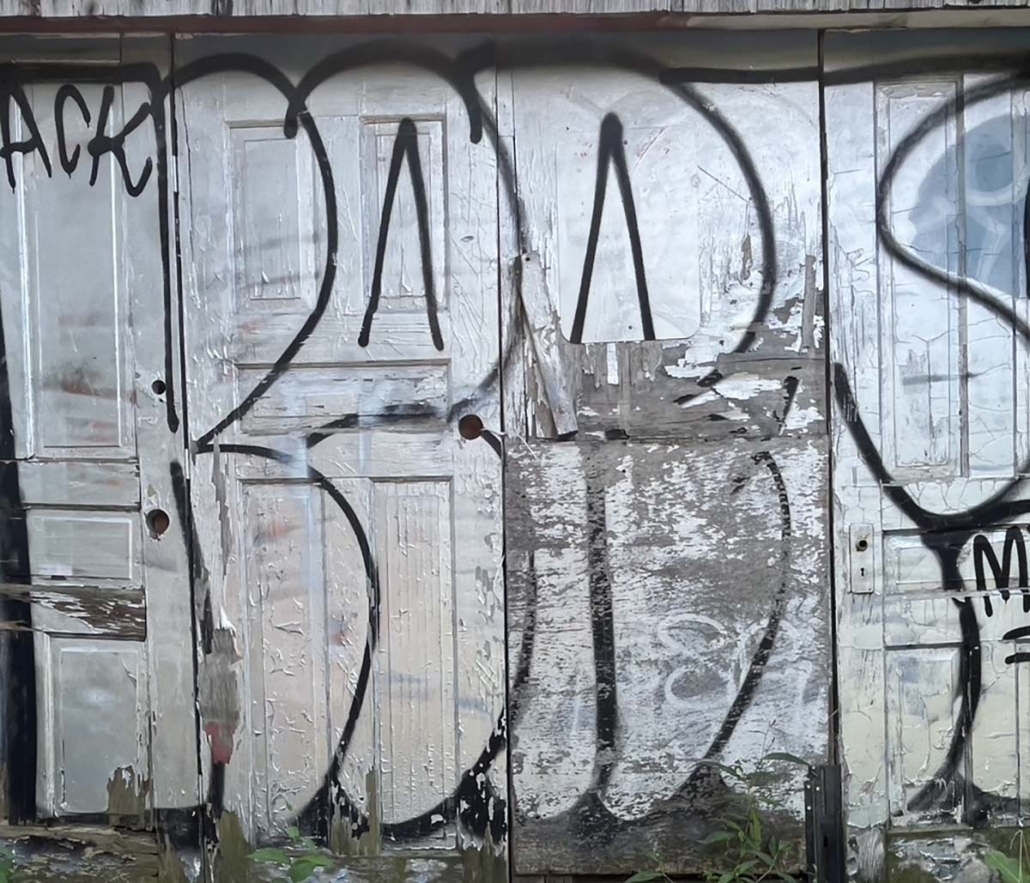
Welcome to our Enter Leaving issue, because every entrance is a kind of leaving, every leaving is a kind of entrance and like this garage, there are lots of doors though they’re sometimes hard to see.
Fiction by Lisa Thornton
Girl, 9, Speaks
Sally McIntyre, age 9, of Dalton, Massachusetts one time peed her pants when her 15-year-old sister locked her in the toolshed in the backyard for the afternoon. McIntyre’s mother furrowed her brow and spoke sternly to the girl when she was finally released from her imprisonment and showed up at the back door with a wet stain in her crotch growing larger and larger and spreading down both of her beige pantlegs. McIntyre knew better than to argue or attempt to defend herself. It was her fault she had failed to keep it together despite adverse circumstances.
On school days, the third grader ran from the white geese that chased her up the hill from the bus stop. She stood between 10-year-old Logan Spence of further up the street and the geese as he swung his backpack at them because she didn’t think it was fair for the geese to get injured for following some internal message they had been born with to chase children and bite them with their hard golden beaks.
The living things McIntyre did not protect were the slugs in the willow across the stream. Those insects (if they even were insects, they were so bulbous and full, so shiny and sticky and plump as if they were animals, how could they be classified as insects, if they were she disagreed) she held in very low regard and did not intervene when her sister nicked the salt shaker from the table and shimmied up the trunk to the lowest big branch where the colony of slimy bags of pus lived and shook the condiment on them until they shriveled and flipped inside out, their tiny wet organs on the outside and their incessant pulling along through trails of slime ceased.
McIntyre kept a journal of the aspects of her life she wanted to keep track of or reconsider or investigate later. Jeremy Trapper’s fake leg, the lisp of Louisa’s little sister, how long a baby bird could survive after it fell out of the nest before it went still and cold. The journal once had a lock and even a tiny key to fit it, but the mechanism had long ago broken and was now just a small metal box along the edge of the cover where the two halves of the book met when closed. But McIntyre liked the broken device and didn’t try to remove it even though she probably could have wrenched it off with her short, nail-bitten fingers because the brokenness of it made the journal seem to her not a secret, not a tome of thoughts she didn’t want anyone to read but an outward expression of what she was inside, like one of the turned-out slugs with her wet parts on the outside, free for anyone to view, if they wanted. If they felt like taking the time.
One Saturday morning, McIntyre’s mother was reading in the rocking chair by the front window and did not look up when Sally stood in front of her with her boots on. Sally listened at her sister’s bedroom door and heard Mick Jagger’s gravelly voice looping around and around on the turntable. Sally tucked her journal in the front of her pants and crawled through the underbrush under the power lines behind the house where the neighborhood stopped and the real world began. To the pond with the long cattails lining the south end and a lip of soft grass at the edge. The journal was full up. She sat on the grassy lip of the pond and tore out her notions one by one. The bed sometimes feels like wood, and I am lying hard on it, like when I am lying on the diving board at the pool. Mrs. Fairchild seemed very far away today, like if I reached out, I could not touch her. How can there not be an edge to outer space? What is the power that makes a blackbird be able to balance on the end of a long piece of yellow grass without bending it?
Sally carefully floated the ripped-out thoughts on the cool water, like she’d seen in a TV documentary once of people in India who placed tiny candles in green flower petals and pushed them out onto the Ganges. She watched the blue college ruled lines get darker and bleed onto the white parts of the paper. Sally McIntyre took her clothes off down to her underwear and stepped into the pond, which was covered now with the insides of her, strips of paper capping the top of the water like the thin layer on top of a crème brulee. She did the breaststroke out to the center, her thoughts brushing her cheeks and clinging to her shoulders and forearms. She floated on her back as her swim instructor had taught her, breathing deeply to fill her lungs with air and thrusting her chest out. She arched her spine, laid her arms out straight, and let her ears slip under the water while her eyes, nose, and mouth stayed in the oxygen and the dry. The sky was a pale blue above. This way, Sally McIntyre heard her own voice. The pond spoke softly and confidently with a lush warble as it read each of her slips of paper aloud, small fish sucking the backs of her legs and the long, wet weeds growing up from the mud at the bottom of the pond undulating in the almost current and tickling the skin on her heels.
Lisa Thornton is a writer and nurse. She has stories in Wild Roof Journal, Pithead Chapel, Necessary Fiction, and other magazines. She has been nominated for Best of the Net, the Pushcart Prize, and Best Small Fictions. She lives in Illinois and can be found on Bluesky and Instagram @thorntonforreal.
Micro fiction by Emily Rinkema
The night Cory dies
Lisa has a bong and we pack it on the porch, too cold to be outside, but Stacy says her parents will know she had a party if they smell pot when they get home tomorrow, so we bounce on our toes and hug ourselves and pass it around, me, Jeff, Amy, Lisa, my twin brother Cory, Ted, the air like broken glass on our cheeks.
When the snow starts, we move inside and drink strawberry wine coolers in Stacy’s kitchen and listen to the Smiths. Frankly, Mr. Shankly comes on and Jeff marches around the house. We all follow, singing loud and off-key, and Lisa knocks over a beer and Cory bumps into a lamp and Amy laughs so hard she pees a little.
Ted kisses me in the garage, pushes me up against the cold, hard metal of Stacy’s dad’s truck and slides his hands under my sweatshirt, and I think about describing it to Amy later, how I will remember to say that his hands were warm, that he tasted like weed, that he tried to unbutton my jeans, but he was too drunk and I had to pee.
Back inside, I watch Lisa lead Jeff upstairs, and I look for Cory, hoping he didn’t see, but Amy says he’s gone, that he took the car, that she’ll give me a ride later.
The snow is coming down thick when I go into Stacy’s bedroom to call home to ask if I can spend the night so Amy doesn’t have to drive in the storm, and I focus on my words as they come out of my mouth, one by one, so Mom won’t know I’m drunk: yes, it is okay with Stacy’s parents. No, Cory left already. Yes, Mom, I’m sure he will be home soon.
Emily Rinkema lives in northern Vermont. Her stories have recently appeared in Cutleaf, Moon City Review, Milk Candy, and Wigleaf, and have been selected for Best Small Fictions, Best Microfiction, and Best American Nonrequired Reading anthologies. You can read more at https://www.emilyrinkema.com/ or follow her on BS or IG @emilyrinkema.
Flash fiction by Melissa Flores Anderson
The Paper Doll Collective
The paper dolls queue close together, almost touching, like paper chains. They stand with their paper outfits carefully curated, paper tags folded over their paper shoulders, paper name tags hanging from their necks. They carry paper cups from the Messenger Coffee place down the block and trade paper money for books and stickers and ideas. They fill the Power and Light district, Main Street and Crossroads. They wipe barbecue sauce off their paper faces with paper napkins.
The paper dolls have escaped from their assigned playsets to gather together in a new scene where they recognize each other, but barely, faces stretched from tiny circles, like images of toys in paper circulars. They shake hands and tap shoulders and slap backs, forgetting that paper can be sharp and paper cuts smart. Some of the paper dolls know each other well, or think they do. They twist their paper fingers together, fill reams with their paper dreams, tear pieces of their paper hearts off and glue stick the confetti bits to each other.
They promise to stay in touch, write letters, send postcards, swap photographs. But instead they fold themselves into suitcases and envelopes, and deliver themselves home, where the paper ideas are put away to make time to earn paper paychecks at day jobs that pay the stacks of bills that arrive each month. They long to touch their paper foreheads together, in commiseration, but summer and fall and winter keep them separated until spring arrives again and they can leave their paper bosses and spouses and children and pets.
The paper dolls ride paper airplanes and coast on the Santa Ana winds above the Hollywood sign and Griffith Park, landing on Figueroa Street. They have traded their cold-weather paper outfits for California spring, for paper t-shirts and skirts and flip-flops, with tabs folded between their big toe and the index toe. The paper dolls complain about Ubers and freeways and how long it takes to get anywhere in a sprawling metropolis. They eat tacos and drink 805 in rooftop bars and dive bars and walk down Hollywood Boulevard, stepping on paper stars.
The paper dolls fill out bingo cards, run pens across title pages with messy signatures, offer advice to newcomers as though they are wise, old tomes. They say hello to the paper faces they met the year before and avoid the ones who tore off pieces of their hearts and sprinkled bits in midwestern streets instead of gathering them into pockets for safekeeping like they promised to do. The paper dolls have learned some lessons. That paper hearts and paper dreams crumple and yellow with age and no one wants to buy last year’s old chapbook.
The paper dolls promise that this year will be the year they finish their paper drafts of novels or short story collections, when they will sign paper contracts for book deals.
In their real lives, the paper dolls get married and divorced. They have babies and raise children. They check paper homework sheets and turn in paper report cards. They feed fish and toss paper plates in the trash. They fall in love with strangers they spent an hour with at a bar on Sunset long after the sun had set because that stranger shared the same distrust of Oxford commas. They wait for spring to come again.
The paper dolls move down Charles Street, across from the harbor, where the clouds are low over the still water. The paper dolls laugh. They smile. Someone takes a picture of the paper dolls, sends it around to the collective. They read words from paper phones and paperbacks and napkins and postcards.
The words are funny. The words are somber. The words are true. The words tell lies. The paper doll’s voices are steady, they quiver, they whisper, they shout. The words fill the room, waft out the door as someone comes in, cross the cobbled street and flit onto the water’s surface.
They read in conference rooms, in restaurants, in bars, in coffeeshops, in hotel rooms, and silently to themselves in taxis and airplanes and walking down the street. They write when they are not writing, words tangled in their paper heads.
The paper dolls lift aluminum cans, glasses of beer, plastic cups of free peanut butter whiskey to their lips. The paper dolls stand in a circle. They tell more stories, but this time to an audience of one or two. The circle shifts, like eddies on the waterfront, particles combining in new configurations. The paper dolls are close together, almost touching, like paper chains, and this time they promise the connection will be sustained. They will not pack away their paper hearts.
The paper dolls thrive best as a collective set.
Melissa Flores Anderson has published work in swamp pink, Chapter House, HAD and Best Small Fictions 2025. Her debut short story collection “All and Then None of You” is out now from Cowboy Jamboree Press. She is a reader/editor for Roi Fainéant Press and EIC of the Broken Hearts Gallery Literary.
www.melissafloresandersonwrites.com
Bluesky/Twitter: melissacuisine IG/Threads: theirishmonths
Poetry by John Grey
Take off time
Wings shudder,
but the fledgling doesn’t budge.
What’s it waiting for?
A breeze?
More encouragement from its mother
on the branch above?
The sky is there for the taking.
Yet the tiny bird fears
the next step in its modest life.
So it pauses,
as if listening
for the exact moment
the world says yes.
But the world is always saying yes.
Finally the bird launches itself,
flies off into the wide, waiting blue.
And the world says yes again.
And again. And again –
wherever the word is needed.
John Grey is an Australian poet, US resident, recently published in Midnight Mind, Willow Review and the Pennsylvania Literary Journal. Latest books “Bittersweet,” “Subject Matters” and “Between Two Fires” are available through Amazon. Work upcoming in the MacGuffin, Touchstone and Willow Review.
Secret
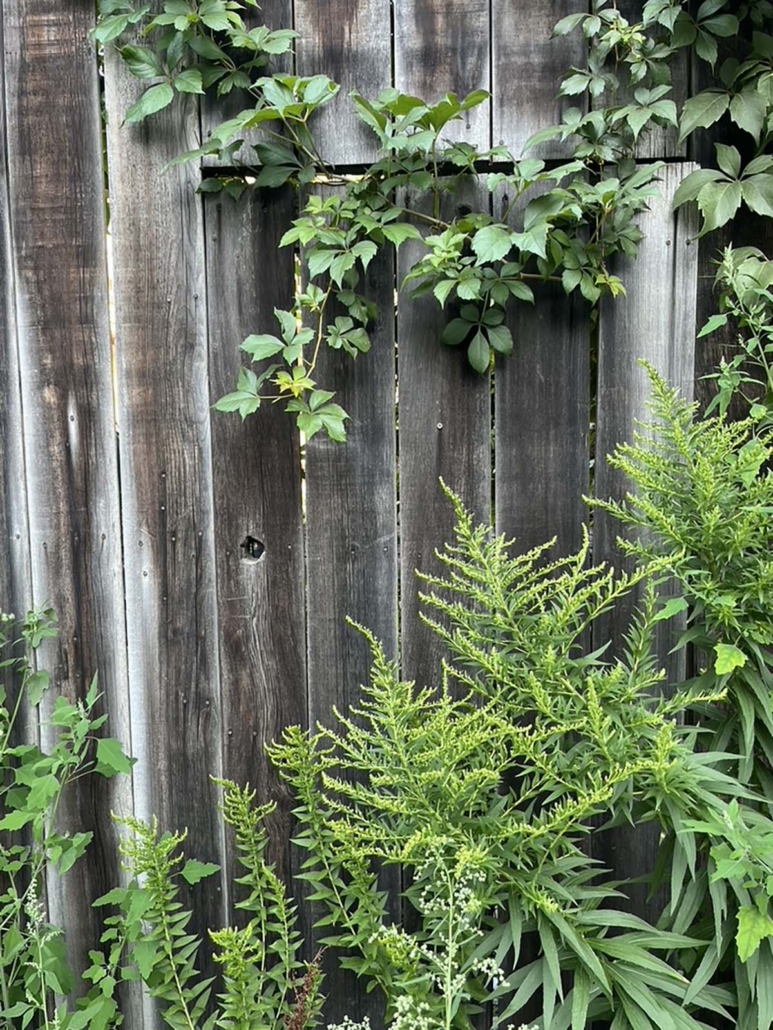
Forgotten doors to hidden spaces
Micro fiction by Emily Hall
The stone lion
Has granite eyes, but he can see everything. Tourists walking through the garden, cameras swinging around their necks. They take photos of the great house, take leaves off the plants. The women haul in crying children on their hips. The men stare skeptically at the tour guides.
Sometimes, when the ticklish moss doesn’t muffle his hearing, the stone lion hears the tourists too. They say, I took time off for this! and Why don’t you watch where you’re going? They mutter about the ticket prices and long lines, and the stone lion wishes he could rest his big, granite paws on their shoulders and tell them that everything will be okay.
The stone lion sees sun and rain. He sees irises erupt and fade. He watches cameras give way to screens, which cast new lights and shadows across people’s faces. He watches children trample the irises and stick their fingers up the other statues’ noses. The stone lion watches a family followed by a quiet girl. The father of this family points to his daughter and says, Why can’t you be more like your friend? The stone lion sees the friend and notices her hands are folded tightly in front of her.
Someone made her hands that way, the stone lion thinks. And he knows this because someone made his paws that way too.
The family and friend finish their tour of the garden. The sun goes down, the stars come out. They shine their brightness along the stone lion’s mane. The stone lion sleeps with his granite eyes open. His big, granite paws rest on his pedestal, crossed at the wrist. But in his dreams, he uncrosses them, leaps down, and walks away.
Emily Hall’s prose has appeared, or is forthcoming, in places such as Passages North, Gooseberry Pie Lit, 100 Word Story, Does It Have Pockets, The Disappointed Housewife, FlashFlood Journal, Short Reads, Cherry Tree, and The Dribble Drabble Review. A prose editor for Pictura Journal, she lives in NC with her husband.
Poetry by Angela Thorne
I sit in the lobby of a police station
waiting for my daughter
to report her rape
pictures she took of her own breasts
bruised with teeth marks
charcoal dark then yellowing
faded burned into my mind
she can talk about it now
that’s something
it took seven months
now i wait
in a corridor
air moves through
& a black-uniformed woman
hair pulled back
a badge on her belt
smiles while she passes
how are you?
tears prick the corner of my right eye
fine fine, I lie
& she badges her way
through a locked door
to enter the space beyond
i look at my phone
wait
check my email where poems pop
from a lit mag
with writers named henry
or adam or todd
musing on vertical light falling
over horses hooves
or the consciousness
of a burning comet
as it falls over a vast desert canyon
in the middle of the night
& whether it exalts
in extinction
& how we know and knew
and didn’t know
about various unnamed things
at once
then i look up at my own reflection
through bulletproof glass
a metallic disk inset
for speaking
while my child speaks
in another room
to a detective taking notes
who may
hear her
& not hear
see her
& not see
Angela Thorne is a writer and musician who has been published in The Bokeh Review, Vine Leaves Literary Journal, Your Tango, The Orff Echo, Doves & Serpents, the San Antonio Review and, upcoming, in The Soliloquist. Her feature script, Serenade, won best screenplay at the Baltimore Film Festival in 2026. She is currently working toward an MFA in creative writing at Lindenwood University.
Flash fiction by Kerry Byrne
Second place until you’re not
The race starts in 10 minutes or thereabouts.
It’s an event she never thought she’d take part in, and Ned’s still not back from the toilets.
When she calls his mobile, he says he’s bumped into Jay—Look behind you—and gives her a tight smile from the water station before hanging up.
She waves him back.
Ned stays where he is and says something to Jay. They glance at her as though she’s unpredictable, like a wounded animal, then slowly make their way through the crowds lining the track.
Her husband is quiet, his micro-aggression loud. He hates it when she isn’t ‘right.’ Especially in public. Jay overcompensates, making a gag about running at their age.
The joke is on her. Ned and Jay met at the cross-country club last year, bonding over the abrupt departure of their first wives, the pros and cons of death vs divorce, only to discover their daughters were in the same class at St. Nick’s.
She’s never been sporty.
Once, when she was ten, she closed her eyes and manifested Asthmatic Aisling’s face so lucidly in her mind—the cobalt tinge to her lips, her saucer-wide eyes—that she collapsed on her bedroom floor, gasping for air, frantically pocket-searching for an imaginary inhaler, knowing that one day an attack might come in useful.
The tannoy announces the race, calling the runners.
You’re up, her husband says, but she’s not sure it’s her place anymore. If it ever was. She’d never wanted a child, and then she met Ned. In his baggage, five-year-old Freya, a mess of September curls and grief.
She watches as mothers stride across the field to take the lane positions they’ve earned, their casual sportswear concealing stretch marks their babies etched into their skin, high-end trainers signalling their intent to win.
Looks down at her battered Converse, too narrow really for her wide feet. Her legs sausaged into jeggings.
There’s no shame in sitting it out, Jay says. Ned nods, too quickly.
Perhaps, they’re right, she thinks. Competing with a dead mother is exhausting enough.
Then she hears it, the chant indecipherable at first amidst the whistles and cheers for the tug of war, the heartbeat of two syllables whispered and repeated, over and over, swelling in volume and clarity as their childish courage grows, her name a tsunami through the rows of pupils sitting opposite the track, Freya smiling and waving, her mother’s hair too wild to tame under a sunhat, her best friend waving, too.
Turning back to the men, she sees so little of their daughters in them. So little of herself in their version of her.
Toes off her All Stars and runs barefoot across the neat white lanes to her start line.
Kerry Byrne lives and writes in the Fens, with a backdrop of sky-filled water and endless horizon. Her words have found a home in BULL, Ellipsis Zine, Frazzled Lit, Lucy Writers, National FlashFlood, Paragraph Planet, Pidgeonholes, Roi Fainéant Press, streetcake magazine and other fine places. Her flash fiction has been nominated for Best of the Net, and she is currently an assistant editor at Frazzled Lit. Find her on X @kerry__byrne and Bluesky @kerrybyrne.bsky.social.
Micro fiction by Sudha Subramanian
If you want a ‘mangai’ you should get it yourself
because they are soaked in the rounded ceramic pot that came with instructions on how to make the perfect brine, because your mother told me I should place it in the topmost shelf away from the sunlight, because after the exhausting dinner last night, I lack the energy to drag a stool, climb up and get the drupe for you.
Because I don’t like the smell of mangoes soaked in salt water, because I don’t like the way you smell after you bite into the juicy fruit, because I don’t like the way you say, “nearly there! You will get it, I’m sure.”
Because I hate the sight of shrivelled skin, because they remind me of my ‘wrinkled tissue’ saree I bought from the boutique store, because you said, “Not bad. But ask mother next time. She has better taste,” forgetting I chose you.
Because the sight of all the mangoes jostling for space evokes memories of the time you said, “learn yoga from mother” and bought me a yoga mat, because I no longer want to ‘adjust,’ ‘fit in’ and make room for myself like those fruits, because I don’t want to be the way you think I should be.
Because I don’t want to hear your underhanded praise of ‘not bad’ and ‘nearly,’ because I don’t want to be like your mother, because I am not in any competition, because, I am just freaking tired of everything I have done so far to please you.
Sudha Subramanian lives in Dubai. Her work has appeared in JMWW, Roi Faineant, The Hooghly Review, among others. Her maiden novel, The Invisible Lines was published recently. She is a tree hugger and an amateur birder. Connect with her on Bluesky @sudhasubraman.bsky.social
Unswallowed
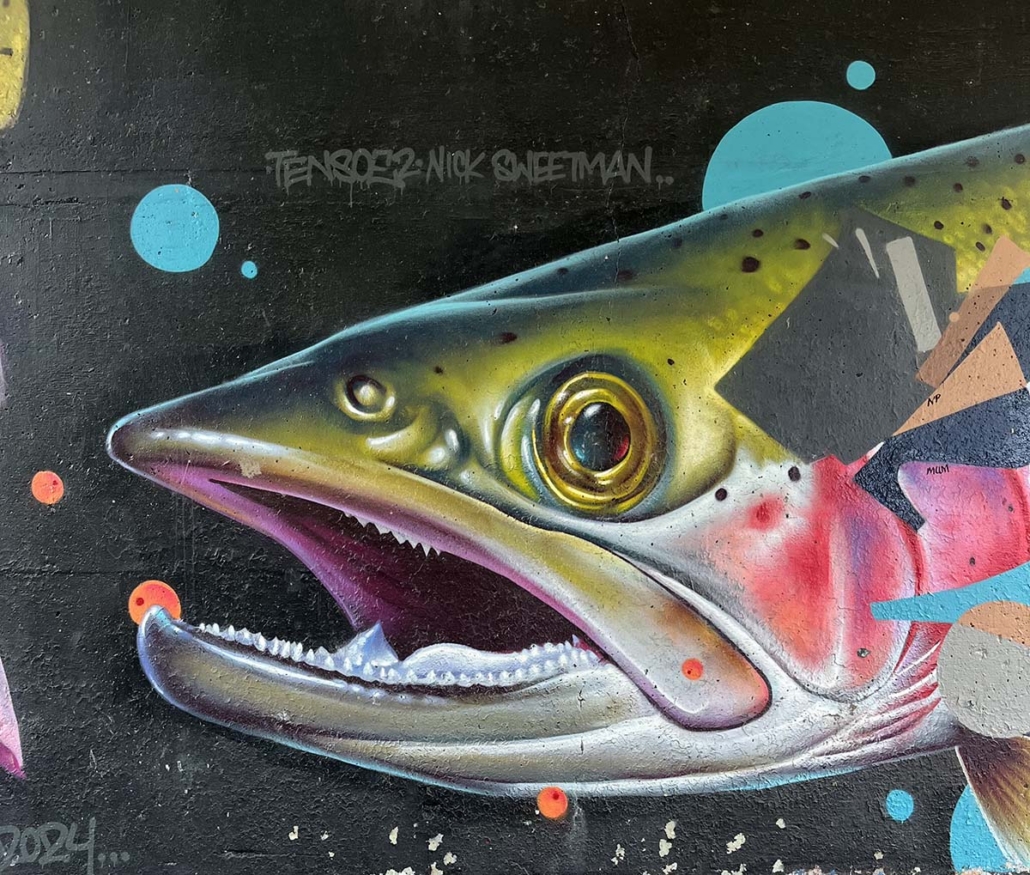
This jewel painted on an underpass by a river.
Poem by Angela Thorne
A memory
mom told me not to spin
on the front sidewalk
& my dress
rippled out into air
fanned wide
a perfect circle
blood flowing
to the tips of my fingers
blurring clouds
a whisper
in a Monet-painted sky
& the birds couldn’t fly
as high
as i
til my shoe caught
& my palms landed
hard against concrete.
i lifted one
felt the sting
saw the red
on my skin
& wondered
how
how
it could be
that concrete
bled all over me
Angela Thorne is a writer and musician who has been published in The Bokeh Review, Vine Leaves Literary Journal, Your Tango, The Orff Echo, Doves & Serpents, the San Antonio Review and, upcoming, in The Soliloquist. Her feature script, Serenade, won best screenplay at the Baltimore Film Festival in 2026. She is currently working toward an MFA in creative writing at Lindenwood University.
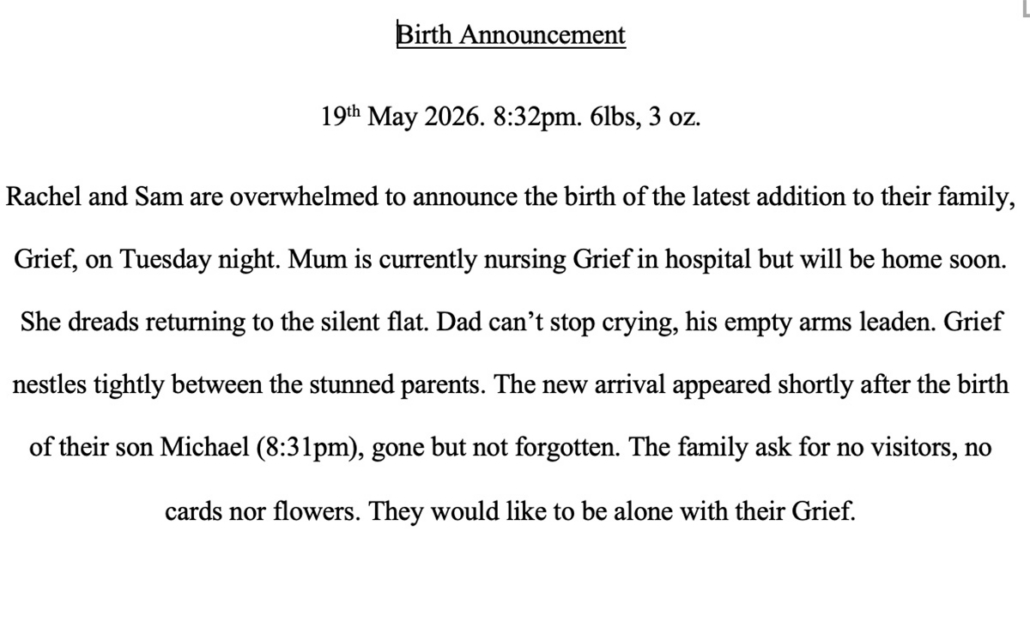
Micro fiction by Louise Hurrell
Louise Hurrell is a writer from Scotland. Her work won the Golden Hare at the 2026 Edinburgh Flash Fiction Awards and is published or forthcoming in The Waxed Lemon, The Broken Spine, and Coin-Operated Press. Bluesky: @louisehurrell.bsky.social
Poetry by Shon Mapp
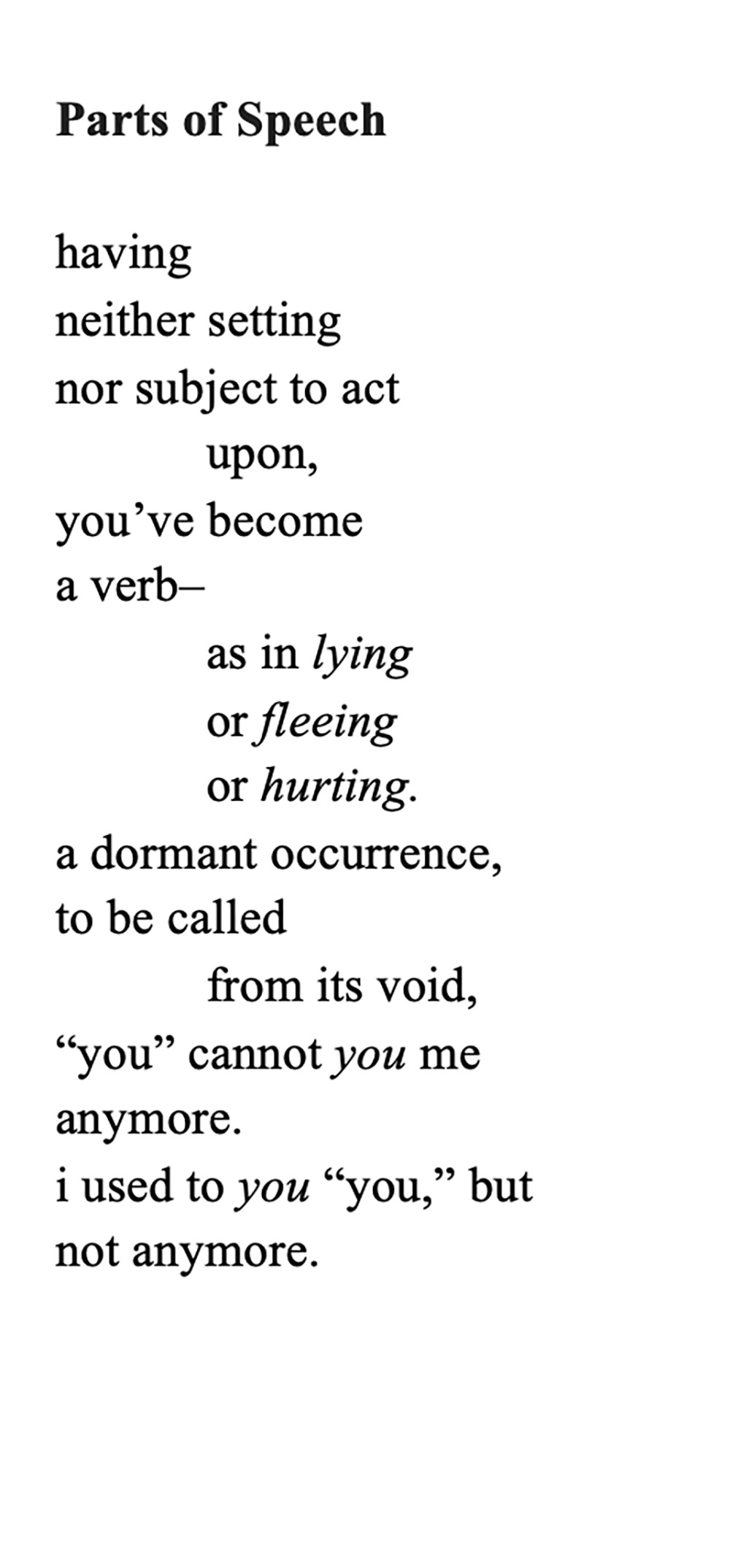
Shon Mapp is a Bajan writer whose pieces explore lesbian intimacy, kinship, and immigrant identities. She has work published in Stanchion, HAD, Neologism, and elsewhere. Connect with her on Twitter & Bluesky: @ShonMapp.
Creative nonfiction by Detje Marcel
Plums
Standing by the window on my tiptoes I can barely see the outline of the driveway. She should be home by now. She told me she would be home by 8 but it’s almost 9 now. I lower back down to my slippered feet and pace the floor. That familiar feeling arrives. Sweaty palms. Slight feeling of vomit in my stomach. Where is she? She promised she would be on time. I look at myself in the reflection in the window and know I should be strong. But I just want her to be home and for tomorrow to come when we’re all eating breakfast around the table, reading our cereal boxes and milk cartons. That there is some chatter, even arguing, just some noise instead of the silence here that keeps encircling me.
I reach into the sink to pull out another purple plum. How many have I eaten now? We picked them for hours today. Trying to dodge Bart, our black lab, who is always out of control and jumping all over me. When I give a quiet yell to tell him to go away my mom scolds me and says that he loves me and that’s why he keeps jumping. She tells me that he never jumps on her when she takes him on walks and I wonder when she has ever taken him on a walk. He doesn’t have a leash or even a collar.
We pick more plums. I love plums. Purple and still slightly firm. That sweetness that you can plonk whole into your mouth and then slowly suck and chew on the pit for hours. We put them into brown paper bags from Safeway and always fill the bags too full so they split as we try to carry them to the kitchen. Plums rolling all over the patio. Picking them up again and putting them into the now torn broken bag I cradle them like a baby and squeeze through the sliding glass door that has been opened just enough for me to shimmy through but not crazy Bart.
As I walk through the darkness of the family room, I smile at the big, no huge, inflated yellow Chiquita banana resting in the corner. My dad brought it a while back. I think he won it in some type of contest and we were all so happy. Who wouldn’t want a huge yellow banana? It does brighten up this dark room with the thick olive green shaggy carpet and enormous vomit colored couch could that could seat all four of us in front of the tv if we were all ever there.
In the kitchen, I’m blinded by the sudden contrast from dark and sullen to bright, white aesthetic. White wooden cupboards, white laminate counters and floors. Everything in this kitchen is polished white except, of course, for the enormous yellow and orange flowers that are papered onto the walls. Such a happy kitchen.
As I put the plum in my mouth and make myself still so that I might hear a car arriving, I can hear my grandma saying how I will get a stomachache if I keep eating plums all day. And, of course I always do. One of the worst stomachaches, a brown bag of plums sitting in a heap at the bottom of my stomach refusing to come out anyway until they finally do. We always have so many plums in that sink and I really don’t know where they all go as there is never jam or tarts or cakes. Just all in my stomach I guess.
I take another peek out the window and still nothing. I wonder again what I will do if my mom never comes home. Where would I go? Who would I live with? I know that if my brother was in charge he would leave me without ever looking back. Though everyone laughs, I think he has truly tried to kill me at least 5 times. I don’t know why he doesn’t like me. I’ve never done anything to him except existed. And we do have such a good time in the mornings, racing out to the heaters as the hot air pumps out. There isn’t anything more comforting than a morning heater sit. My nightgown blowing up like a parachute as the warm air circles around my body. I look over at the heaters, searching for some of that warmth but they only come on in the mornings. I don’t know why.
But now, suddenly, I can hear the car pulling up. I stand at an angle so they can’t see me watching them and can see two bodies embracing and I know my mom has cast her spell on another man. I don’t care. She’s home. As the keys in the door turn, I think about running to my bedroom and pretending I’m asleep but I can’t resist the warm hug even though it is always accompanied by a tired look of not again.
Detje Marcel is a writer who has lived in France and Australia and currently resides in Palm Springs California.
Remember
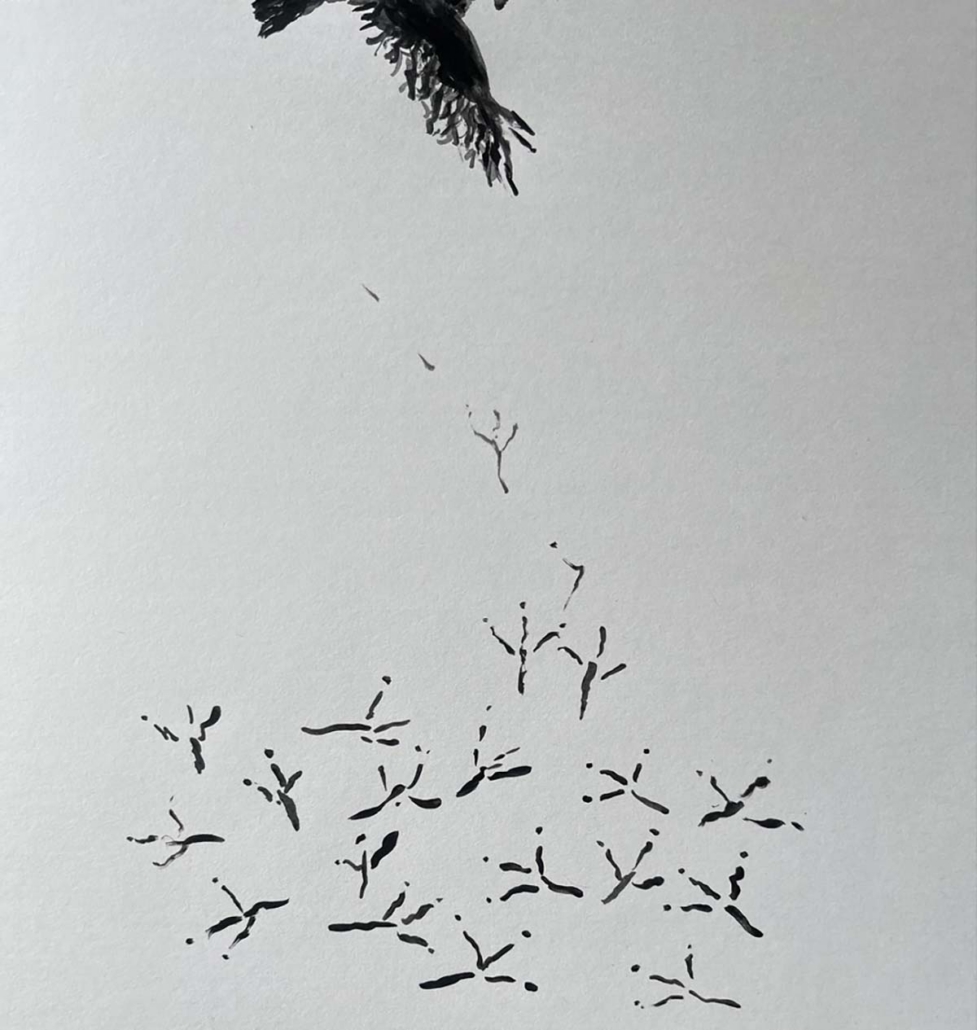
Any way you choose is fine
Contributors
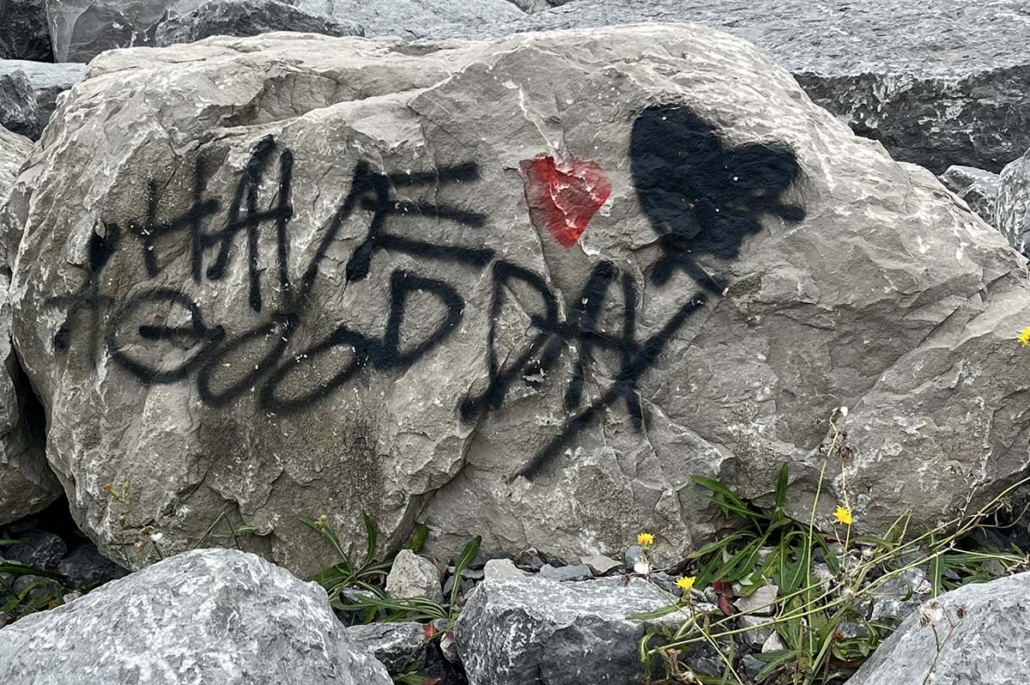
With thanks to contributors Melissa Flores Anderson, Kerry Byrne, John Grey, Emily Hall, Louise Hurrell, Shon Mapp, Detje Marcel, Emily Rinkema, Sudha Subramanian, Angela Thorne and Lisa Thorton. Their work opens worlds.
Flash fiction by Ruth Rosenhek
Familiar Constellations
I watched out of the corner of my eye as Lulu plopped her suitcase on the bed and tossed clothing into a pile. No. Not again. I stretched my legs and left the room.
That night, she grilled steak, potatoes, and broccoli, then arranged them on blue ceramic dishes, as if the meal might distract us.
We ate on the couch, watching a film about an older woman who no longer recognised her daughter. Lulu leaned closer to me as she cried.
We usually stroll after dinner but the never-stops-give-me-a-break rain was pelting down, so instead we snuggled in bed. She always hogs the blankets but I don’t mind.
I felt slightly nauseous and couldn’t sleep. I walked around the house, then lay on the couch for a while. Sometimes that helps.
Luckily in the morning, it was nice out and we drove to the butterfly sanctuary. The paths were crowded and we bumped into some of Lulu’s friends and their Maltese puppies. So cute.
Later, Lulu reminded me that she’d be leaving the next day to visit her elderly mother. I wanted to come along but she said it’d be better if I stayed home. Her mother was difficult even in the best of circumstances.
I’d sleep in our bed, walk in the park, eat a couple meals a day that Lulu prepared and put in the freezer in advance.
The sky was clear that night and Lulu, as always, pointed at the stars, telling their stories. I called out into the darkness and she joined me.
The next day, Lulu drove off. I paced the empty hallway to the kitchen that no longer smelled of steak. When I got tired, I lay in bed, one eye open.
Sometimes the neighbour came by and we went for a walk in the park, ate snacks together. I kept watch by the front window, glancing at the front gate. The food started to taste bland and the bed was no longer crisp the way Lulu kept it.
In the evening, I’d still look up at the stars but there were no stories.
Finally, I heard the familiar sound of Lulu’s car. I ran outside through the side doorway and she came shouting down the driveway, ‘Frankie, I’m home!’ I threw myself into her arms, whimpering, tail wagging, then raced around the yard in circles until she picked me up and held me tightly.
‘Thanks for taking care of him,’ Lulu called to the neighbour trimming his roses next door.
‘Wanna treat?’ she asked. And just like that we were back into our routine.
That night after our stroll, Lulu and I gazed at the stars. ‘Look there, Frankie.’ She pointed upwards. ‘Doggy star!’
I pressed up against her legs and her fingers scratched behind my ears just the way I liked.
Lying in bed later, I sighed deeply, then waited. Lulu exhaled in response and we both closed our eyes as I settled my head on her arm.
Ruth Rosenhek is a writer in her sixties based in Northern NSW, Australia, and a semi-retired psychotherapist. She is the author of The Meeting Place (2025), a dystopian, place-based novel. Her flash fiction has appeared in the Epiphanies Anthology (Habitat Press), Offtopic Publishing, Bending the Arc, and Flash Fiction Magazine. She also has micro-fiction on 101words.org.
Flash fiction by Delphine Gauthier-Georgakopoulos
Something
Old
Susan’s sense of sarcasm, because it’s not politically correct anymore—or so she was told. Again—but she doesn’t care. She’s not lonely. She’s got her cats to keep her entertained; their zoomies may keep her awake, but they make her laugh. And she’s got insomnia anyway. At least now it doesn’t bother anyone.
New
The loud crack in her right knee that precedes shooting pain, her groaning as she goes up and down stairs. She’s done pretending to be young. Hair colours and Pilates don’t cover it at this point. Past her prime, her use-by date. So be it.
Borrowed
Susan’s pretense to be healthy; drinking herbal tea and eating salads. She tried the green vibe before and could only keep it going for her kids when they were little. Then all hell broke loose. She craved meat and cheese. Junk food. Coffee. Red wine. Everything but green.
Blue
Susan’s swollen ankles, calves, thighs. Blue veins and mood. There should be a registry for menopause. No party or funky cake—although chocolate chip cookies would be okay. Just blue presents: fans, water misters, ice patches, baggy clothes, comfy shoes. But it’s a woman’s issue in a man-made society. So Susan limps to the shop to get some ridiculously priced blue cheese and a bottle of curaçoa to celebrate. She embraces her blue. It’s as refreshing as rocket salad melting in the fridge. Past her prime, her use-by date. So be it.
Delphine Gauthier-Georgakopoulos is a Breton writer, teacher, mother, nature & music lover, foodie, dreamer. Her debut historical novel was a Novel Fair runner-up. She is the founder & EIC of Raw Lit, co-founder of The Pride Roars collective and was a contributor to Poverty House. Her work can be found in anthologies and magazines, including Ghost Parachute, Bending Genres, Cowboy Jamboree, BULL, and Epistemic. She lives in Athens, Greece.
https://delphinegg.weebly.com/X/Facebook: @DelGeo14 & Bluesky: delgeo14.bsky.social
