Creative nonfiction by Travis Flatt

A Box Under the Christmas Tree Looks Suspiciously Like a PlayStation 5

A box wrapped in green and red plaid paper, which looks suspiciously like a PlayStation 5, appears under the Christmas tree. Like, almost three feet tall by ten inches wide, this box, not just a console jankily wrapped in paper—the things have a distinctive look, like a science fiction toaster.

At the moment, a PlayStation 5 is impossible to find at Target, Walmart, etc. You can buy one online for almost twice its official price and you’re likely to get scammed. 

For this and other reasons, such as existential guilt that I have better shit to do with my free time (reading, writing, exercising), which is ample after losing my job—our boutique bookstore finally closed last month—I told my wife I didn’t want a PlayStation 5. If I ever get one, I’d wait until they were available in stores and cheaper.

I’m not handy. I don’t own any tools. My wife is, and she’s got a whole, for real toolbox. Today, while she’s at work advising students at the university, I check in her toolbox for measuring tape and don’t find any. I do find a ruler in the drawer of my stepson’s school supplies. 

I Google the exact dimensions of the PlayStation 5 box.

The box under the tree is just a little too short, half an inch, but maybe the measurements I found online aren’t up to date. Maybe this is some kind of new packaging. Second-hand and repackaged by eBay scalpers. For the life of me, I can’t figure out what she’d buy for me that would come in a rectangular box this size. 

I peek through a fold of wrapping paper. I find a loose place where I can just slightly lift and peep in with a flashlight—gently, so as not to rip the paper. The box inside is white. The PlayStation 5 box is white. I accidentally tear the paper, just the tiniest bit, trying to catch a glimpse of the logo or any writing, so I quit.

When my wife comes home from work, she sets immediately to cooking dinner. I’m a miserable cook. She dislikes anything I make and isn’t polite about it. She’s the kind of honest that doesn’t smile and eat shitty food. She wanted to go to cooking school but couldn’t afford it. She can bake difficult things like sticky toffee pudding and did so when my mom asked last Christmas. 

I follow her around the kitchen, wanting to ask her about the mystery box, and worry she’ll notice I tampered with it. I can think of nothing but the box and seem distracted until she finally asks me what’s up? 

I break down and ask. 

(By the way, I’ve already called my mom to tell that I suspect my wife bought me a PlayStation 5. My mom says that sounds like something only my wife would do. She means that as a compliment.) 

I confess everything—the measuring, the peeking.

Well, I try to, anyway; she cuts me off at the “tearing the wrapping paper” part and tells me it’s a pasta maker. 

I start crying. Feel helpless. Mortified. 

Besides books, which I normally buy for myself, I haven’t asked for anything for Christmas in years. We’re poor. Not miserably so, just fine. I don’t enjoy shopping or spending money. 

She says it’s okay to want things

When we go to, say, Target or TJ Maxx, and my wife just goofs around and browses things while I stand silently—like a dick—and think, “junk,” ruining the whole normal American thing for her.

I lie, promise I’m alright, that a pasta maker sounds fun, and we talk about cooking pasta, our mutual love of pasta, the time we’ll spend together, how I’ll learn something (improve my cooking; just improve at something), but I’m half talking and half listening. I’m entirely hoping she’s lying, that it is a PlayStation 5 and this has been subterfuge, that somewhere there’s a PlayStation 5 hiding—in her closet, in the attic, in her office, somewhere.

Travis Flatt (he/him) is an epileptic teacher and actor living in Cookeville, Tennessee. His stories appear in Necessary Fiction, Cleaver, Iron Horse, Scaffold, and elsewhere. He enjoys theater, dogs, and theatrical dogs.  

Poetry by Madison Golding

The Bookshop at the End of Wanting

I found you between the cracked spines in the vellichor of a shop where someone else’s marginalia said yes, exactly! in pencil beside the line I needed most.

I looked through paned glass, its glazing chipped.

Every stranger outside the window carried their whole catastrophic life in a canvas tote. All of us, separately, immolated.

Obsession. Infatuation. 

These are neighborhoods I keep moving back to. The rent is cheap. Great light. I swear I’ll leave some day. 

I never do.

We stayed up past reason. The sky went indigo and misty, ice clouds lit from below. You said you knew what it meant like you always do.

The same wanting returns each morning.

Relentless.

Madison Golding writes from the Washington D.C. area about the people history invented and systems tried to silence. Their poems explore desire, the body, spiritual longing, and tenderness smuggled through toughness. They publish at substack.com/@madisongolding.

Fiction by Anselm Eme

THE SILENCE PROTOCOL 

      “Names have power. And the ones without names have nothing left to lose.” 

When the girl spoke the dead man’s name, Daniel Okorie knew the silence was over.

The name came softly, almost gently, carried on the harmattan wind like dust. But it struck Daniel with the force of a gunshot.

“Ezekiel Nwoye.”

Daniel froze mid-step.

He had not heard that name spoken in seventeen years. Not in public. Not in prayer. Not even in memory. Ezekiel Nwoye was not supposed to exist anymore. The file said so. The order said so. The silence demanded it.

Yet the voice was unmistakable.

A child’s voice.

Daniel turned slowly.

She stood at the edge of the red-earth clearing, barefoot, thin, no more than twelve. Her dress was grey with dust. Her eyes were steady. Too steady for a child who had just spoken the name of a man officially erased from history.

“You shouldn’t say that,” Daniel said.

The girl tilted her head. “Why?”

His heart thudded. “Because he’s dead.”

She shook her head. “No. He was deleted.”

The word cut deeper than any knife.

“DeLeTeD”.

Daniel felt the weight of years press down on his chest. He had written that word himself. Signed it. Authorized it. Lived by it.

He took a careful step closer. “What is your name?”

She hesitated. Just for a second. Then, quietly, “I don’t use it anymore.”

The forest behind her stirred. Not with wind. With memory.

Daniel knew then that the Protocol had failed.

Seventeen years earlier, Daniel Okorie had been a rising intelligence officer in Abuja, young, efficient, and trusted. When the government discovered the existence of “The Silence Protocol” they needed someone who could obey without asking why.

The Protocol was simple.

When knowledge threatened stability, erase the knower.

Not by killing.

By removing the name.

No records. No photographs. No mentions. No graves. Families were told the person never existed. Entire lives wiped clean, not violently, but completely.

People forget faster than they admit.

Daniel was good at it.

Too good.

Ezekiel Nwoye had been the last deletion. A civil archivist who discovered a pattern, whole communities altered, elections quietly influenced, histories rewritten. Ezekiel had asked the wrong question.

So Daniel erased him.

Or thought he did.

Now a child stood before him, speaking the forbidden.

“Who taught you that name?” Daniel asked.

The girl looked past him, into the forest. “He did.”

Cold spread through Daniel’s veins. “That’s impossible.”

“He talks when the forest is quiet,” she said. “He says names get lonely when no one remembers them.”

Daniel swallowed.

“What else did he say?”

She met his eyes. “He said you would come.”

They walked in silence.

Daniel led. The girl followed. She moved like someone who knew the path long before she stepped on it. That disturbed him more than her words.

“You live near here?” he asked.

“Yes. But not with people who use names.”

He glanced back. “Why not?”

“Names make it easier to be found.”

Daniel stopped.

That was something Ezekiel used to say.

They reached the abandoned research station just before dusk. The building was supposed to be sealed, burned, and buried under paperwork. Instead, it stood intact, swallowed by vines, waiting.

Daniel keyed the rusted door open. Inside, dust lay thick, undisturbed.

Except for footprints.

Small ones.

“You’ve been here before,” Daniel said.

The girl nodded.

“Why?”

She pointed to the back room. “Because this is where you started lying.”

The words struck harder than accusation. They were statement. Fact.

Daniel moved slowly into the room.

The terminal flickered to life.

On the screen was a list.

Names.

Hundreds of them.

Redacted. Restored. Reappearing.

His work, undone.

“This shouldn’t be possible,” Daniel whispered.

“You taught the system how to forget,” the girl said. “But you never taught it how to forgive.”

The terminal beeped.

A new name appeared.

OKORIE, DANIEL

Daniel staggered back.

“No,” he breathed.

The girl watched him. “The silence eats everyone eventually.”

He tried to shut the system down.

It resisted.

Files opened on their own. Audio logs played. Faces long erased stared back at him from the screen. Not angry. Not vengeful.

“PrEsEnT”.

“This isn’t revenge,” the girl said, as if reading his thoughts. “It’s balance.”

Daniel laughed bitterly. “You’re just a child.”

She stepped closer. “I was born the night the Protocol reached full capacity. When the last name disappeared, something needed to remember.”

Understanding dawned, slow and terrible.

“You’re not a messenger,” Daniel said.

“No,” she replied. “I’m ThE ArChIvE.”

Outside, the forest began to hum.

Not loudly. Gently. Like voices testing their throats after years of silence.

Daniel’s hands shook. “If these names return, everything breaks. Governments fall. People panic.”

She nodded. “Yes.”

“You don’t understand what you’re doing.”

“I understand exactly,” she said. “You thought silence was safer than truth.”

Daniel slumped into a chair. “It was.”

“For you,” she corrected.

The terminal chimed again.

Another name restored.

Then another.

Daniel felt tears sting his eyes. He hadn’t cried since his first deletion.

“Why me?” he asked.

The girl’s voice softened. “Because you still remember.”

He looked at her, really looked.

“And you?” he asked. “What happens to you?”

She smiled, small and tired. “I get to rest.”

The humming grew louder.

Daniel stood.

“Then let me help.”

She searched his face. “You would give up your name?”

He didn’t hesitate. “I already lost it.”

She nodded.

The terminal asked one final question.

CONFIRM RELEASE?

Daniel pressed ENTER.

The lights died.

The forest went silent.

Then the wind moved again.

By morning, the research station was gone.

In its place stood young trees.

Villagers would later speak of a strange calm that settled over the land. Of old photographs reappearing in drawers. Of names remembered without pain.

As for Daniel Okorie, no record of him exists.

But sometimes, when the forest is quiet, a voice can be heard, steady, regretful, at peace.

Telling names.

So they are never lonely again.

Anselm Eme is a Nigerian writer, poet, banker, and independent financial consultant. He is the author of Eleven books, including WHISKERS, OUR KIDS AND US, AWAKE AFRICA!, SAGES IN PURSUIT, and SHRIEKS AND GIGGLES. Blending finance with creative storytelling, Anselm writes with heart, clarity, and purpose. His work explores identity, culture, social justice, and human resilience. Rooted in African experience but reaching global souls, Anselm’s words invite readers into honest reflection and lasting inspiration.

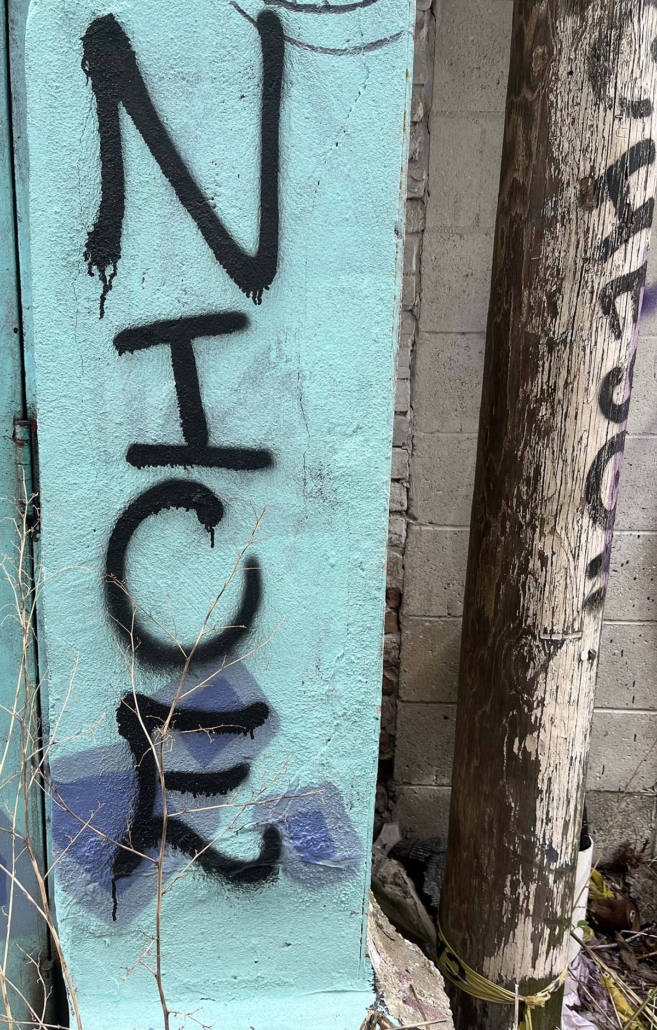
Word

A while ago we moved from a small city to a big one, into a place that was half the space and twice the price. On the coldest day of the year. Everything was frozen. We were nervous, aware of what we were losing but not yet what we’d gain. Someone helping us move had a habit of saying ‘nice!’ when he went into each new room, or with each new haul of boxes. ‘You’ll be happy here,’ he said when everything was in. He had no idea how much that helped us but we’re passing it on. Nice!

Fiction by N.H. Van Der Haar

After Steel Magnolias

With a deep and queer passion, I live in delusion. If I were to die before her, heaven forbid, knock on wood, my mother will perform a tremendous impersonation of Sally Field from Steel Magnolias. A sublime performance in that greatest of films. She would buy a dress for the occasion, a stylish black number snatched off the rack from David Jones. She would match it as best she could to the shoes she had. She will clutch at the soil on my grave and scream. She will rip and tear at her hair and jewellery. My father would passively tell her to calm down and to get a hold of herself. She will swipe him away with a large hand.


“I wanna know why, I wanna know! Why my son’s life is over!”

My sister will heave my mother up from the fresh grave. Both women will struggle to compose themselves, dabbing their cheeks, eyes, and nose. My sister will dust my mother’s knees and gently scold her for getting dirt on the bottom of a brand-new dress. Our mother will look stoic for a moment only to lift her head to the sky and howl. Like a wild animal. My beloved husband will have already driven off to the wake, to sip an icy old fashioned and fan themselves with the funerary program.


“I’m fine… I’m fine… I’m fine!”

Mother takes a manicured fist and smacks it into the palm of her other hand and swears viciously. Like her mother did and her mother before her. My father would again tell her to calm down with his shaky, emotional voice. Repetition would not enhance the phrase’s effectiveness. My mother ignores her blubbering husband and rants with vitriol rising in her voice, eyeliner moving to stain her tired face.

“I don’t think I can take this… I… I don’t think I can take this! I just wanna hit something! I just wanna hit somebody… till they feel as bad as I do! I just wanna hit something! I wanna hit it hard!”

Again she stumbles. My sister will back away as she drives her hand deep into the soil and squeeze a handful of it in her fist.

“I’m supposed to go first!”

She struggles to hold herself upright. Her ankle will bend at an awkward angle. She has sprained it painfully but will only become aware of this tomorrow morning as the alcohol leaves her system.

I’ve always been ready to go first!”

 
She will weep thick tears and stain the words on my small tombstone. At the wake, she will get so emotional she will try to blow her nose with the funerary program and get a paper cut just beneath her nose. My cousins will grin and snicker at the red mark and say Mother got it shaving her beard off.

In his own very particular kind of mourning, weeks from now, my father will plant over my grave a magnolia tree. All day my father will slave over a hole in the ground. Dressed in a stained white skivvies and tradie’s shorts. He will dig it alone with nothing more than a shovel, despite the gravedigger turning up as the sun begins to set, with a post hole digger that gets it done in a quarter of the time and with no sweat.

The magnolia tree will grow tall and straight, unassisted by unnatural fertiliser, to close to its full height of 5 metres tall. Children with their parents, on visits to the graves of grandparents and great uncles they cannot remember, will pluck the creamy flowers to leave as gifts on stranger’s tombstones. A lonely woman, whose parents are all dead now and her girlfriend will sit under it and weep. Years later, cemetery garden maintenance will be instructed to trim it back in the winter. But they will be pruned too far and the following year later it will die. All that will be left of my crumbling grave is a rather small tombstone and a dead magnolia tree. My mother will another hole in this cemetery. My father will be quietly cremated and his ashes scattered on the property his second wife owned with him. My sister will tear at the soil and earth holding my crumbling body until she can hold me aloft. From my rotting mouth, I sing to her.

“Behold the Ship of Theseus”.

On the way to the wake, Father plays ‘Past Carin’ by the Bushwackers Band on the radio. The thrum of the guitar and heavy lyrics fill everyone’s hearts. My sister whispers, almost to herself, that the song reminds her of that Australian film, Acute Misfortune. The artist Adam Cullen dying alone on his stripped mattress. Mother is moisturising her dirty and red hands with the creams she keeps in the glovebox.

“That is awful, just awful”

Slowly, the tears will dry and the sniffling will stop. The group’s individual gazes move out to stare at the landscape, the vanishing road beneath the car and the slow-moving cattle stomping through the passing fields.

N.H. Van Der Haar is a writer based in Melbourne. They can be read in AntipodeanSF Magazine, Novellum Magazine, North Dakota Quarterly and The Victorian Reader. He is also a permanent staff writer for The New Absurdist Magazine. He can be found online on Instagram @nic_noc_nac

Don’t forget

Flash fiction by Zary Fekete

No comment (Reflections of Bathsheba)

The rooftop tiles stayed warm long after sunset. They reminded her of her home in the desert…her feet buried in the sand waiting for Father to come home with the sheep…her mother by the fire, pressing the dough against the hot stone. She would listen to them talking softly as the stars slowly overcame the night sky until nothing was felt except their brilliance.

She wondered…why had she left? The answer came back…everyone did. The city’s gravity was too great.

The rooftop became her escape after the streets had wound her heart too tight.

She used to sit there with her knees pulled to her chest, watching the steam from the bath drift over the ledge. Lights from the palace reflected in the water, red and gold. A drone passed once. She thought it was a bird. That was before.

The photo came two days later. Someone else’s angle, taken from above. Her hand resting on the stone rail. A twist of steam. The soft curl of her neck. 

My good side, she thought later.

Winced.

She didn’t read the first headlines. The phone buzzed until the battery died. When she finally turned it on again, the word trending blinked in the corner. Her name, everywhere, spelled wrong and shouted loud. Bad AI made her eyes move in unnaturally. Looking where she wouldn’t have looked.

He posted a video: soft lighting, piano music, tear at the corner of his eye. He used the word mistake like a lifeline, tossed it into a crowd and waited for applause. They gave it to him.

The messages kept coming:
Witch.
Whore.
Queen.

A lawyer asked if she had known he was married.
A reporter asked what she had been wearing.
Someone else asked if she would “share her side.”

She closed the door softly after that. Curtains drawn. Phone face-down.

Later, someone knocked to tell her about Uriah. Sand, shrapnel, friendly fire. A rearrangement of words that meant the same thing: gone.

She remembered how he used to hum when he shaved. Always the same song, just the melody. The sink would be wet when he finished. She would wipe it dry with the edge of her sleeve.

His toothbrush was still in the cup by the sink. She threw it out. Then took it back out. Rinsed it. Left it on the counter.

The palace moved on. The man who had wept on camera returned to the pulpit, then to the boardroom. Then to the throne.

She moved into a smaller place with peeling paint in the stairwell. No one recognized her there. She bought a new phone and didn’t log in. The bath in this apartment was deeper. The water sounded different. More distant, somehow.

Sometimes, when the light caught the tile just right, she could see her own reflection. Not her face…just the outline. A shimmer. A body interrupted.

One night, she poured salt into the bath. Not much. Just enough to feel the difference. The water held her more gently that way. Her eyes stung. She didn’t mind.

She stopped watching the news. She stopped explaining.

Online, her page still exists. The last post remains:
Her hand, a white robe, her neck just so.

Her good side.

The comments are off.

Zary Fekete grew up in Hungary and currently lives in Tokyo. He has a debut novella (Words on the Page) out with DarkWinter Lit Press and a short story collection (The Written Path: A Journey Through Sobriety and Scripture) out with Creative Texts. He enjoys books, podcasts, and many many many films. Twitter and Instagram: @ZaryFekete Bluesky:zaryfekete.bsky.social

Fiction by Cuyler Meade

Some Stories We Tell Ourselves, And Some We Don’t

This photo album meant something to Susan. She said it was a way to make something that lasts. It never meant much to me. Not sure I recall ever opening it. Sat on this shelf since the last time she touched it. That was back when Susan was still Susan. Now she’s gone. Not gone like she was gone at first. Gone-gone. Five years. She didn’t last, but the album did. So I guess in that sense she was right.

The things you find packing up an old house.

The first page is just one picture. Vertical. Centered. Ancient. I’m happy. She’s happy. You’re supposed to be happy on your wedding day. We were. We didn’t know.

Second page you see her flair for the dramatic on display. She cut the edges with those scrapbook scissors. Pinking shears, they’re called. A crinkle-cut border doesn’t change the squalor of these memories. But even then, she was happy. I was happy, sometimes. In these pictures, of rugged apartments and ragged clothes, of paint stains and soap suds, I was mostly happy. In spite of the dirty living, I was happy.

These go on for a few pages. Then the kids arrive, and the pinking shears are hidden away. We took so many pictures in those days. Especially with Debbie. Debbie’s first smile—just like her mom’s, same dimple. Debbie’s first park—the one around the corner from that second apartment, with the wood chips that gave me a splinter and Debbie tried to eat. Debbie’s first stuffed bear. Debbie’s first spoonful, steps, birthday (my mother-in-law took this one—Susan is in it). We slowed down with Jon. Just too much to do to take photos all the time. Or maybe we took them and never developed them. Same difference.

She bought a new camera around this point. I remember fighting over the cost. Guess she was right, again. These pictures are much sharper than the others. Clean and crisp. Bright colors. If perhaps a little soulless. Maybe that’s because I’m not smiling. Or maybe it’s because her smile is obviously false. Kids are bigger. These are spaced out though. Recitals. Ballgames. Prom dates in front of the maple tree. Graduations. We stand and smile like the perfect happy family. This camera is good enough to catch we’re lying to it. She printed them anyway. Pasted them in here. Memories.

Some of these aren’t pasted. Or were and they weren’t pasted well enough. Looks like she wrote on the back of them. Wonder if they all have writing. Debbie Junior Year Class Play – Guys & Dolls. She wrote these lightly, in pencil. Slanted, curvy letters. Gentle hand. Jon w/Jazz Band – 8th. Etcetera. Not many pictures of me, but more of me than of her. Makes sense I guess. Her camera.

Back here they’re all loose. Just kind of stuck to the pages by the friction of time and nothing else. They protest with a loud sort of cracking sound when I peel them off. These were from my retirement party. Debbie was at college. Jon still home was the only reason we were hanging on together. Look at these guys. Their saccharine faces toasting to me and my life to come. Some life. I should call Dennis, I heard his wife died, too. Wow, there’s Polly from sales. Looks as good as ever. Wonder where she is these days. We had some times. Dave Retirement w/Friends Susan wrote. Yeah, I guess.

She really fell off keeping this album together after this point. Hard to blame her. Honestly, kind of incredible she made it this deep. What was the use? What soft, warm, Kodachrome memories did she want to preserve? There’s no photographic evidence of what was really happening. Of our real lives. Of the times I stayed late at the office just to avoid coming home to the madhouse. Of the times we woke the kids shouting at one another. Of the battles with Debbie about boyfriends and pot. Of the nights I stayed with Polly when she thought I was in Newark on business. None of that’s in here. And now she’s gone, there’s hardly anything of her for me to even remember her by. Not the way she was. Not the way she pretended to be. Nothing.

Must’ve been in counseling we agreed to get couples pictures taken. Waste of money. The counseling and the pictures. Nothing helped. We never bothered with a divorce because she got sick and then it all seemed kind of pointless, and what were either of us going to do anyway? She stuck around a while longer and by then I had nowhere to go. But here it is, the big glamor shot we took at the department store together. Good gravy we look ridiculous. Me all stuffed into that shirt, and her, in that gigantic dress because she thought she looked fat. 

She wasn’t fat. And who cared if she was. My face is all red. Had we been fighting that day? You can’t tell by the look of her. Or maybe you can and I just don’t remember what a true smile looked like to know the difference between one and whatever this is. Who knows. Who cares. We didn’t know it when we took the pictures, but she was already sick. She’d make it another ten years but she was sick already even then. Maybe she knew it and didn’t say. I didn’t know. But she was already forgetting things. Calling me her dad’s name. Writing letters to dead people. Telling me old secrets from when she was a kid. All I know, she might not have remembered if we’d been fighting or not when we sat for this picture. Amazing she even thought to print it out and put it in here. She wrote on the back of this one too.

Dave & Susan (me), After His Affair (Polly).

Cuyler Meade is a father of six and a husband of one living and working in rural Northwest Colorado. Cuyler’s fiction has been published by Elegant Literature, TL;DR Press, Intrepidus Ink, Eggplant Emoji, and Trampset. He writes stories about relationships, parenthood, guilt, disappointment, grief, and discovery.

Flash fiction by A Allan Chibi

The archivist

Cork, Present Day.

The rain turned the city to shadowed glass. Clíodhna Feldman sat in the archives, watching mist creep across the River Lee. The air felt wrong, too still, too thick, like paper soaked in old breath. Each keystroke echoed louder than it should, as if tapping the lid of a coffin.

The obituary blinked onto the screen. Harold Simms, 47, sudden exsanguination in Toronto. No evidence of foul play.

Simms. A name she had flagged years ago in a Hampshire record from the 1500s. She had dismissed it as coincidence. But then came the others: Vermont, Dakar, Tasmania. All descended from a militia that razed an Irish village in 1494. All deaths by blood loss. All called natural.

She opened her private logbook and wrote beneath the red heading: Lineage 12C – Mallow Incident.

Later, at dinner, an elderly woman leaned close, her eyes flickering like moths against flame.

 “You’ve seen the pattern,” she said.

Clíodhna nodded.

“Archivists call it the Red Thread. It moves through bloodlines like a needle through flesh, sealing wounds not to heal but to hush. Those who see it are marked. Those who feel it are already sewn in.”

Clíodhna swallowed. “Who is he?”

“He was fae once. Then something older bound him. Now he walks among us with purpose. He is the blade of a promise kept to gods no longer worshipped.”

Clíodhna thought of her dream: a man in a black suit, cane tapping, fog swallowing him whole.

“He doesn’t kill innocents,” the woman added. “Only the blood‑guilty. Only those who carry the line of the massacre.”

“And me?”

“Because you remember. Because your people kept the Book when others forgot.”

When Clíodhna finally saw him, the rain bent around his body. His hat cast no shadow. A busker’s saxophone spat a discordant note as he passed, and a dog blocks away began to howl.

Black linen suit. Ivory shirt. Panama hat. The cane shimmered briefly, eagle‑headed, then plain again. Its rhythm matched her heartbeat. He turned, nodded once, and kept walking.

The nod echoed down her spine. Recognition, not of her name, but of her role.

That night she logged another death. Bridget McHale, 38, Durban. Hampshire blood. No family. The body collapsed inward, veins shriveled to black threads, mouth open in silence, eyes peeled wide as if they had seen something vast before the blood turned to vapor.

Clíodhna whispered a prayer, then closed the file.

Her dreams were not quiet but silent, as if the world itself had stopped listening. No wind, no voices, no cane tapping. Only the sensation of something stitching beneath her skin.

When she woke, red pinpricks marked her wrists, constellations she did not recognize.

Andrew A. Chibi is a Canadian historian of Early Modern British and European history, author, and educator whose work explores the complex religious and political dynamics of Tudor England and the European Reformation. As an historian, his work includes Henry VIII’s Conservative ScholarThe Wheat and the Tares, and Fear God, Honor the King. Under the pen name A. Allan Chibi, his fiction works include novels such as The Unprofitable Servant and the first two volumes of The Saga of the Stolen One series. Short fiction has appeared in Altered Reality Magazine and in House of Long Shadows among othersHe is known for combining rigorous historical research with compelling storytelling, appealing to scholars and general readers alike. He currently lives in Windsor, Ontario.

Contributors

Solape Adetutu Adeyemi / Hugh Behm-Steinberg / Yuan Changming / Jay Chesters / Andrew A. Chibi / Lori Cramer / Anselm Eme / Zary Fekete / Travis Flatt / Madison Golding / Kyla Houbolt / Christine Gallagher Kearney / Cuyler Meade / Kelly Murashige / Gloria Ogo / Nora Rawn / Esther Sadoff / Beth Sherman  / T.L. Tomljanovic / N.H. Van der Haar / Jenny Wong / Huina Zheng

Endnote

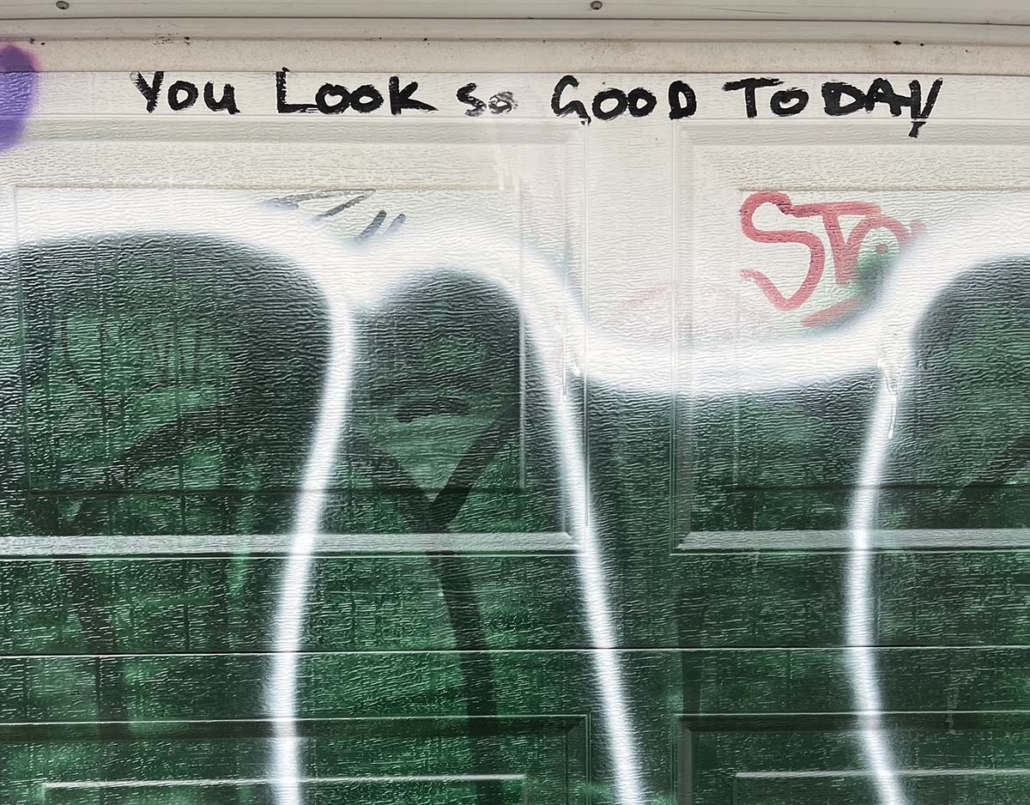
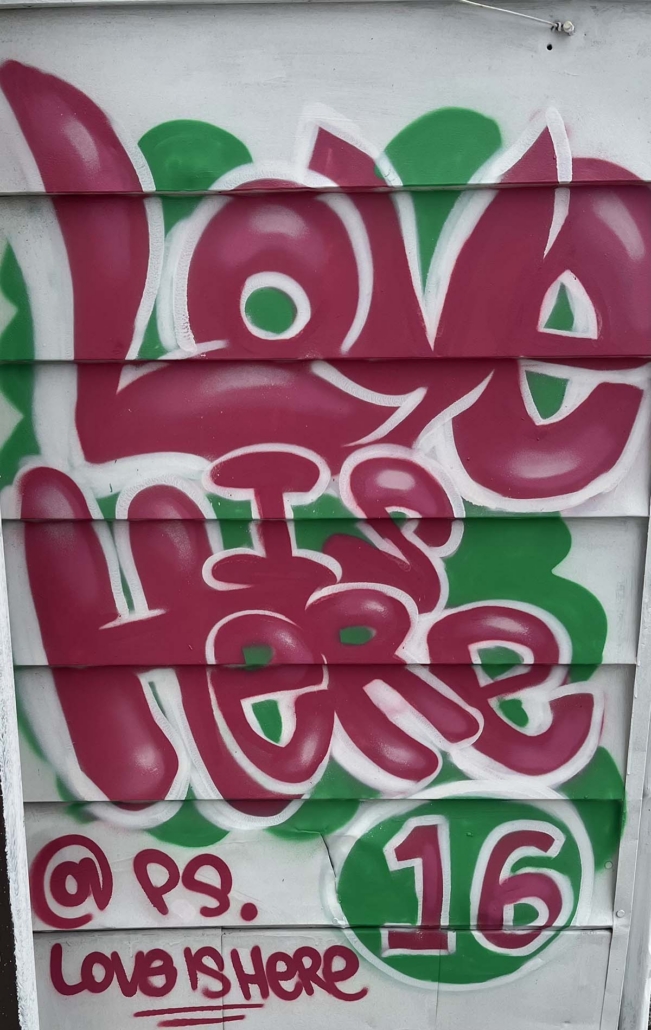
We hope you enjoy this issue of Temple in a City. We named it Here because we are. Here. All of us. Everyone whose work is featured here, everyone who reads it or will read it. Everyone who scrawled graffiti on a wall or made public art for the world to see. We are here, right now, and that matters.

PS

This is the signature of street artist (and regular artist) @ps.loveishere, but we think it’s also a pretty good statement of fact. There are torrents of despair all around. But even so, love is here. We hope you enjoy this issue.